
Proceratium
Roger, 1863
Hairy Curltail Ants
Species Guides
7- Proceratium chickasaw
- Proceratium compitale
- Proceratium crassicorne(Fat Curltail Ant)
- Proceratium croceum
- Proceratium mexicanum
- Proceratium pergandei(Pergandei-clade Hairy Curltail Ants)
- Proceratium silaceum(Silaceum-clade Hairy Curltail Ant)
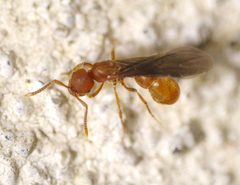
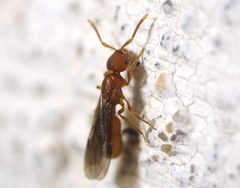
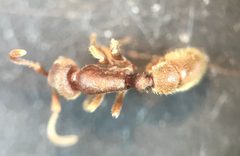
Proceratium is a rare of ants in the Proceratiinae and the type genus of tribe Proceratiini. These ants are distributed across temperate and tropical regions worldwide but are infrequently collected due to their cryptobiotic lifestyle. Colonies are small, typically containing fewer than 200 individuals. Some are of , particularly spider eggs. The genus is notable for its ability to curl the dorsally more than 90 degrees relative to the body axis.
Pronunciation
How to pronounce Proceratium: //proʊˈsɛrətiəm//
These audio files are automatically generated. While they are not always 100% accurate, they are a good starting point.
Identification
Members of Proceratium can be distinguished from other by their highly flexible petiole and postpetiole that allow the to curl dorsally over 90 degrees relative to the body axis. They are closely related to Discothyrea, from which they differ in various morphological characters of the mesosoma and petiole. Within Proceratiinae, they differ from the fossil genus Bradoponera by extant status and from Discothyrea by broader geographic distribution and generally larger body size in most .
Images
Habitat
Nests occur in soil, rotten wood, under stones, or on tree branches. inhabit temperate and tropical forest litter zones.
Distribution
Pantropical and temperate distribution: Old World from Spain to Japan, sub-Saharan Africa, Mauritius, Malay Archipelago, New Guinea, Queensland (Australia), and Fiji. New World from Canada to Brazil and some Caribbean islands. China harbors 14 documented .
Diet
Some are of , primarily spider eggs. General feeding habits for the as a whole are not fully documented.
Behavior
Cryptobiotic habits result in rare collection despite widespread distribution. The can curl dorsally more than 90 degrees relative to the body axis, an unusual flexibility among ants. Colonies are relatively small, usually containing fewer than 200 individuals.
Ecological Role
in forest litter . Some function as specialized predators of spider , potentially influencing spider .
Similar Taxa
- DiscothyreaSister within Proceratiini; also rare and cryptobiotic with similar - habits in some , but generally rarer and with more restricted distribution than Proceratium.
- BradoponeraFossil within Proceratiini; differs in being extinct and known only from fossil record.
More Details
Taxonomic significance
Proceratium is the type of tribe Proceratiini, making it central to the classification of this lineage. The genus comprises approximately 90 described globally across eight biogeographic regions.
Collection challenges
Despite broad geographic distribution, Proceratium are among the most rarely collected ants, attributed to their cryptobiotic lifestyle and small colony size rather than true rarity in nature.
Sources and further reading
- BugGuide
- Wikipedia
- GBIF taxonomy match
- iNaturalist taxon
- NCBI Taxonomy
- Catalogue of Life
- Contribution to the Knowledge of the Genus Proceratium Roger (Hymenoptera: Formicidae: Proceratiinae) in the New World
- Synopsis of Ant Genus Proceratium Roger, 1863 from China (Hymenoptera, Formicidae), with Description of Seven New Species.