
Cryptopone gilva
(Roger, 1863)
Southern Pit-jawed Ant
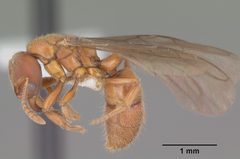
Cryptopone gilva is a of in the Ponerinae, originally described by Roger in 1863. It is one of four historically known New World species in the Cryptopone, which was revived as a distinct genus following phylogenetic and morphological studies. The genus exhibits pantropical distribution with greatest diversity in East and Southeast Asia. The species is known by the Southern Pit-jawed Ant.

Pronunciation
How to pronounce Cryptopone gilva: /kɹɪptoʊˈpoʊni ˈɡɪlvə/
These audio files are automatically generated. While they are not always 100% accurate, they are a good starting point.
Identification
Cryptopone gilva can be distinguished from other New World Cryptopone using morphological characters detailed in species-level keys. possess the characteristic pit-jawed mandibular structure that gives the group its . For definitive identification, reference to the updated key for New World Cryptopone species (Mackay & Mackay 2010 and subsequent revisions) is required.
Images
Distribution
Neotropical Region; historically documented as one of the four New World Cryptopone . Specific locality records beyond regional occurrence are not detailed in available sources.
Similar Taxa
- Cryptopone guianensisAnother New World Cryptopone ; distinguished by morphological characters in keys
- Cryptopone holmgreniAnother New World Cryptopone ; distinguished by morphological characters in keys
- Cryptopone mirabilisAnother New World Cryptopone ; distinguished by morphological characters in keys
- Cryptopone pauliRecently described Brazilian ; distinguished from C. gilva by morphological characters in the updated New World species key
More Details
Taxonomic history
Cryptopone gilva was long treated within the Pachycondyla until phylogenetic and morphological considerations led to the revival of Cryptopone as a distinct genus. This was one of four New World representatives known prior to the 2019 description of Cryptopone pauli from Rondônia, Brazil.
Collection status
As of the 2019 revision, no new specimens of Cryptopone gilva had been reported in recent collections, and the was considered poorly documented in contemporary faunistic surveys.