
Cryptopone
Emery, 1893
Pit-jawed Ants
Species Guides
1- Cryptopone gilva(Southern Pit-jawed Ant)
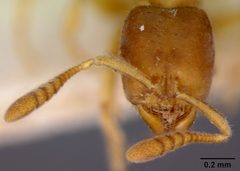
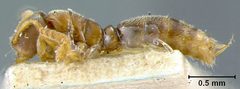
Cryptopone is a of small to medium-sized ponerine ants with a pantropical to worldwide distribution, with highest diversity in East and Southeast Asia. The genus contains approximately 23-25 extant . range from 1.7–6.1 mm in length. Many species exhibit an endogeic (underground-dwelling) lifestyle, making them difficult to detect and historically under-recorded. The genus was taxonomically revised in 2010 and again in 2022, with species previously synonymized under Wadeura separated out.

Pronunciation
How to pronounce Cryptopone: /ˌkrɪptoʊˈpoʊni/
These audio files are automatically generated. While they are not always 100% accurate, they are a good starting point.
Identification
Identification to level requires examination of morphological characters, particularly mandibular structure and body proportions. In the New World, can be distinguished using the key provided by Branstetter & Longino (2022), which separates five species: C. gilva, C. guianensis, C. holmgreni, C. mirabilis, and C. pauli. C. ochracea in Europe can be identified from photographs by trained myrmecologists familiar with Central European fauna, based on its small size and ochraceous coloration.
Images
Habitat
Predominantly endogeic (underground-dwelling) . In Europe, found in lowland areas mainly below 200 m elevation, with records between 75–274 m. Occurs in temperate and tropical regions, with Asian in forested habitats. The New World species C. pauli was collected from soil in tropical rainforest (Floresta Nacional do Jamari, Brazil).
Distribution
Worldwide distribution with highest diversity in Asia (East and Southeast Asia). Present in the New World with five known in the Neotropics. In Europe, recorded from Hungary, Serbia, Romania, Slovenia, Spain, Italy, Greece, and Turkey. Asian distribution includes Japan (C. sauteri) and other temperate and tropical regions.
Seasonality
in C. ochracea occur from 5–20 September. In C. sauteri, unmated queens are detected in nests throughout the year, with seasonal changes in development and reproductive documented in temperate Japan.
Life Cycle
with queens. occur in early September in European . Colonies may exhibit polydomous nesting (multiple nest sites). In C. sauteri, approximately 60% of collected nests were queenless, and unmated queens are frequently present in nests year-round. development shows seasonal patterns in temperate .
Behavior
Endogeic lifestyle—primarily underground, making detection difficult. occur in a narrow time window in early September. queens are commonly recorded, while males are rarely detected due to identification difficulties. May exhibit polydomous nesting .
Ecological Role
Likely contributes to soil processes as an endogeic , though specific ecosystem functions are poorly documented.
Human Relevance
Historically under-recorded due to cryptic underground lifestyle, leading to false rarity assessments. Citizen science projects using social media platforms (Facebook groups) and online databases have proven effective for detecting C. ochracea, revealing the was overlooked rather than rare. This demonstrates the value of non-professional involvement in documenting understudied species.
Similar Taxa
- WadeuraPreviously synonymized under Cryptopone; two (now four) were separated out again in 2022 based on phylogenetic and morphological considerations
- PachycondylaHistorically included Cryptopone ; the Cryptopone was revived after phylogenetic and morphological revision in 2010
Misconceptions
The C. ochracea was formerly considered rare in Europe, but citizen-science data revealed it was under-sampled due to its endogeic lifestyle rather than genuinely rare. Similar false rarity may apply to other Cryptopone species.
More Details
Taxonomic History
The was revived in 2010 following phylogenetic and morphological revision that separated it from Pachycondyla. In 2022, Branstetter & Longino further revised the genus, separating Wadeura that had been synonymized under Cryptopone.
New World Diversity
Five are currently recognized in the New World: C. gilva, C. guianensis, C. holmgreni, C. mirabilis, and C. pauli (described 2019 from Brazil, the first record for Rondônia state).
Research Methods
Detection typically requires soil sampling or pitfall trapping rather than surface observation. Citizen science using photographic records has proven effective for C. ochracea when myrmecologists can verify identifications.
Sources and further reading
- BugGuide
- Wikipedia
- GBIF taxonomy match
- iNaturalist taxon
- NCBI Taxonomy
- Catalogue of Life
- Seasonal cycle of the nest composition in the Ponerine ant Cryptopone sauteri (Hymenoptera: Formicidae)
- Differences in body sizes and physiological conditions among castes in the ponerine antCryptopone sauteri(Hymenoptera: Formicidae)
- Formerly considered rare, the ant species Cryptopone ochracea (Mayr, 1855) can be commonly detected using citizen-science tools
- Rare or Overlooked? The Ponerine Ant, Cryptopone ochracea (Hymenoptera, Formicidae): An Updated Distribution in Romania with insights on the species swarming activity
- A New Species of Cryptopone Emery (Hymenoptera: Formicidae: Ponerinae) from Brazil with Observations of this Genus and a Key for New World Species