
Solenopsis texana
Emery, 1895
thief ant, Texas thief ant
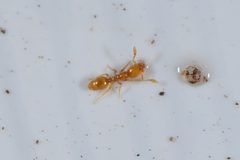
Solenopsis texana is a of thief in the Formicidae, described by Emery in 1895. The species is native to Texas and surrounding regions. Two are recognized: S. t. texana and S. t. catalinae. Like other members of the Solenopsis, this species is small and inconspicuous, earning the "thief ant" due to its habit of nesting near other ant colonies and stealing resources.

Pronunciation
How to pronounce Solenopsis texana: /ˌsoʊlɪˈnɒpsɪs tɛkˈsænə/
These audio files are automatically generated. While they are not always 100% accurate, they are a good starting point.
Identification
Solenopsis texana is one of several known as "thief ants," making identification to species level difficult without microscopic examination. The species is small-bodied, typical of the Solenopsis. S. t. catalinae (Wheeler, 1904) and S. t. texana (Emery, 1895) differ in subtle morphological characters. Accurate identification generally requires examination of or reference to original species descriptions.
Images
Distribution
Native to Texas, USA. The S. t. catalinae has been recorded from Santa Catalina Island, California.
Behavior
The "thief " refers to the of nesting in close proximity to other ant colonies and stealing food resources from those neighbors. This behavior has been observed in multiple Solenopsis , though specific documentation for S. texana is limited.
Similar Taxa
- Solenopsis molestaAlso called the thief ; shares the and similar small size and nesting habits near other ant colonies
- Solenopsis invictaCongeneric with similar general , but much larger, more aggressive, and with a painful sting; S. texana is smaller and lacks the defensive and venom potency of the red imported fire ant
More Details
Taxonomic history
The was described by Carlo Emery in 1895. The S. t. catalinae was described by Wheeler in 1904 from Santa Catalina Island, California.
Nomenclature
The "thief " is applied to multiple Solenopsis , including S. molesta and S. texana, due to their shared behavioral of kleptoparasitism on neighboring ant colonies.
Sources and further reading
- BugGuide
- Wikipedia
- GBIF taxonomy match
- iNaturalist taxon
- Catalogue of Life
- Grasshoppers of Colorado
- Oh, oh, oh, I'm on fire - Red Imported fire ant, Solenopsis invicata — Bug of the Week
- In a warming world, here comes the red imported fire ant, Solenopsis invicata — Bug of the Week
- Fire ant winged reproductives: male and female | Beetles In The Bush
- How Entomologists are Battling Invasive Ants to Protect a Texas Cave Ecosystem
- Non-Repellent Insecticide Prevents Fire Ant Infestations in Nursery Plant Root Balls