
Temnothorax nevadensis
(Wheeler, 1903)
Nevada Acorn Ant
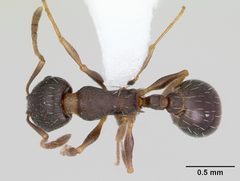
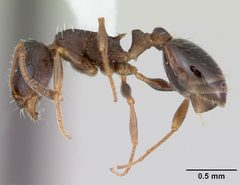
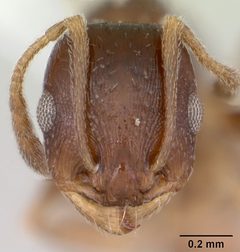
Temnothorax nevadensis is a of acorn ant in the Formicidae, originally described by Wheeler in 1903. Like other members of the , it is a small species that typically nests in preformed cavities such as hollow nuts or acorns. The species is part of a diverse genus containing over 350 species worldwide, with approximately 60 species known from North America.
Pronunciation
How to pronounce Temnothorax nevadensis: /tɛm.noʊ.ˈθɔː.ræks nɛ.və.ˈdɛn.sɪs/
These audio files are automatically generated. While they are not always 100% accurate, they are a good starting point.
Identification
Temnothorax nevadensis can be distinguished from other Temnothorax by morphological characters detailed in taxonomic revisions. As with other acorn ants, are small (typically 2–4 mm), with 11-segmented and a distinct petiole node. Species-level identification requires examination of specific morphological traits such as , propodeal spine shape, and pilosity patterns.
Images
Habitat
Nests in preformed cavities, particularly hollow nuts and acorns, as is characteristic of the Temnothorax.
Distribution
Known from western North America; the specific epithet 'nevadensis' suggests an association with Nevada and surrounding regions. The is recorded in the AntWeb database with specimen data available.
Behavior
Exhibits typical Temnothorax nesting , utilizing small preformed cavities rather than excavating soil nests.
Ecological Role
Contributes to nutrient cycling and soil processes as a ground-dwelling .
Human Relevance
Subject of taxonomic and myrmecological research; specimens are cataloged in AntWeb with unique identifiers facilitating data sharing.
Similar Taxa
- Temnothorax longispinosusSimilar small acorn ant ; distinguished by specific morphological characters and geographic distribution
- Temnothorax pilagensCongeneric slave-making ; T. nevadensis is not known to exhibit slave-making