
Myrmecocystus mimicus
Wheeler, 1908
Mimicus Honeypot Ant
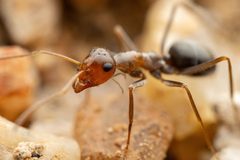
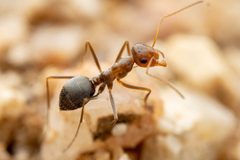
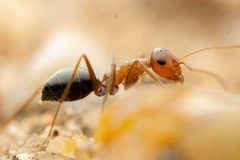
Myrmecocystus mimicus is a North American of honeypot ant in the Myrmecocystus, described by Wheeler in 1908. The species is widely distributed across the southwestern and central United States and into Mexico. Like other members of its genus, it exhibits the specialized honeypot where certain serve as living food storage vessels. The species is part of the Mimicus-flaviceps group of honeypot ants.
Pronunciation
How to pronounce Myrmecocystus mimicus: /mɪərˌmɛkoʊˈsɪstəs ˈmɪmɪkəs/
These audio files are automatically generated. While they are not always 100% accurate, they are a good starting point.
Identification
M. mimicus belongs to the Mimicus-flaviceps group of Myrmecocystus, which can be distinguished from other honeypot ant groups by specific morphological characteristics. Within this , precise identification to level requires examination of and geographic context. The species is often grouped with M. flaviceps and related , forming a complex that can be challenging to distinguish without detailed morphological analysis.
Images
Habitat
Arid and semi-arid environments including grasslands, desert scrub, and open woodlands. Nests are typically constructed in soil, often with characteristic mound structures or crater-like entrances.
Distribution
Widely distributed from Kansas south through Texas and into Mexico, westward to California. The range spans the southwestern and central United States and extends into northern Mexico.
Behavior
Exhibits the honeypot ant characteristic of the : specialized () store liquid food in their greatly distended , hanging from the nest ceiling and serving as living food reserves for the colony during times of scarcity.
Similar Taxa
- Myrmecocystus flavicepsClosely related member of the same group (Mimicus-flaviceps group), requiring detailed morphological examination to distinguish
- Myrmecocystus mexicanusAnother widespread North American honeypot ant with overlapping geographic range in the southwestern United States and Mexico
- Myrmecocystus navajoSympatric honeypot ant in parts of the southwestern range where identification requires careful comparison