
Camponotus chromaiodes
Bolton, 1995
ferruginous carpenter ant, red carpenter ant
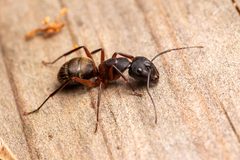
Camponotus chromaiodes, commonly known as the ferruginous or red carpenter ant, is a of carpenter ant native to the eastern United States with records extending to Nebraska, Kansas, and possibly California. of this species have been observed removing honeydew droplets from spotted lanternfly nymphs, suggesting potential for developing mutualistic relationships with honeydew-producing insects. Like other carpenter ants, it excavates galleries in wood for colony housing rather than consuming wood for nutrition.
Pronunciation
How to pronounce Camponotus chromaiodes: /ˌkæmpəˈnoʊtəs kroʊˈmaɪoʊdiːz/
These audio files are automatically generated. While they are not always 100% accurate, they are a good starting point.
Identification
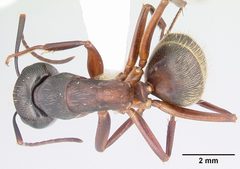
Camponotus chromaiodes can be distinguished from the similar black carpenter ant (Camponotus pennsylvanicus) by its reddish or ferruginous coloration rather than black. From field ants (Formica spp.), it is distinguished by the smooth, even contour of the in profile—field ants possess a distinct notch or dent in the center of the thorax. The shares with other Camponotus the characteristic of a single node (petiole) between thorax and , and range from approximately 3/8 to 1/2 inch in length.
Images
Habitat
Colonies are established in dead wood, including decaying stumps, fallen logs, and hollow trees. Primary colonies require high moisture levels and are typically located outdoors. Satellite colonies may develop in moist wood within structures, including wall voids, window sills, and areas with water damage from leaks or poor drainage.
Distribution
Native to the eastern United States. Documented from Nebraska and Kansas westward, with possible occurrence in California. The occurs within the range of the spotted lanternfly (Lycorma delicatula) in southeastern Pennsylvania, where it has been observed foraging on lanternfly honeydew.
Seasonality
are active spring through fall. Indoor activity may occur on warm winter days in infested structures. Winged reproductive queens and males typically emerge in spring.
Diet
. Feeds on other arthropods, plant material including nectar and seeds, and honeydew produced by sap-feeding insects. Has been observed removing honeydew droplets directly from spotted lanternfly (Lycorma delicatula) nymphs.
Host Associations
- Lycorma delicatula - honeydew source observed removing honeydew droplets from nymphs; potential for developing tending similar to - mutualisms
Life Cycle
Complete with , larva, pupa, and stages. Colonies contain egg-laying queens, of varying sizes (minors and majors), and seasonal winged reproductives. Large major workers function in colony defense; smaller workers care for and forage.
Behavior
establish foraging trails to productive food sources. Has been observed aggressively defending honeydew resources, including biting other ants and at feeding sites. Workers display tactile solicitation of honeydew from lanternfly nymphs using and mouthparts, reminiscent of tending.
Ecological Role
Contributes to wood decomposition through excavation of dead wood. Functions as a and scavenger of other arthropods. May serve as a node by consuming and potentially distributing honeydew from sap-feeding insects. harbor Acetobacteraceae bacteria in their guts, suggesting potential nutritional .
Human Relevance
Can establish satellite colonies in moisture-damaged structural wood, potentially causing damage over time. Not a wood-destroying organism in the same manner as —excavates rather than consumes wood. indicate underlying moisture problems requiring correction. Colonies in standing dead trees do not require removal unless trees pose structural hazards.
Similar Taxa
- Camponotus pennsylvanicusSimilar size and , but distinguished by black coloration versus reddish-ferruginous coloration of C. chromaiodes
- Formica spp. (field ants)Similar size and occasional indoor occurrence, but distinguished by thoracic notch in profile versus smooth of carpenter ants
More Details
Gut microbiome
Acetobacteraceae bacteria have been documented in the guts of , though the functional significance of this association remains to be determined.
Honeydew feeding dynamics
Observations in southeastern Pennsylvania indicate C. chromaiodes actively exploits honeydew from the spotted lanternfly, with researchers noting the potential for this to develop more intimate mutualistic relationships with lanternflies similar to classical - tending .
Sources and further reading
- BugGuide
- Wikipedia
- GBIF taxonomy match
- iNaturalist taxon
- NCBI Taxonomy
- The “silky-bellied humpbacked” ant | Beetles In The Bush
- Sugar Rush: Spotted Lanternfly Honeydew Attracts Variety of Fellow Insects
- Carpenter ants here and there: Camponotus spp. — Bug of the Week
- Ant bodyguards here and there: Odorous house ants, Tapinoma sessile, and carpenter ants, Camponotus — Bug of the Week
- Big black ants in the home: Carpenter ants, Camponotus spp. — Bug of the Week
- Bichos Argentinos #10 – Friday Formicine | Beetles In The Bush