
Camponotus bakeri
Wheeler, 1904
Baker's Carpenter Ant
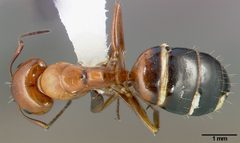
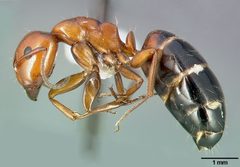
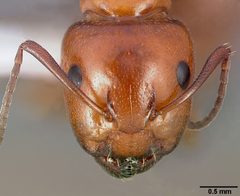
Camponotus bakeri is a of carpenter ant to the Channel Islands of California, with additional in mainland California and Arizona. It nests in dead wood, including decaying stumps, fallen branches, and hollow trees. Like other members of the Camponotus, it excavates galleries rather than consuming wood for nutrition. The species is named in honor of an individual with the surname Baker, following standard entomological naming conventions of the early 1900s.
Pronunciation
How to pronounce Camponotus bakeri: //ˌkæmpəˈnoʊtəs ˈbeɪkəri//
These audio files are automatically generated. While they are not always 100% accurate, they are a good starting point.
Images
Habitat
Nests in dead wood including decaying stumps, fallen branches, and hollow trees. Requires moist wood conditions for colony establishment. Primary colonies are located outdoors in natural wood substrates.
Distribution
to the Channel Islands of California; also reported from mainland California and Arizona. The Channel Islands represent the core of its restricted range in the western United States.
Diet
, feeding on small arthropods, plant material including nectar and seeds, and honeydew produced by sap-sucking insects such as aphids and scale insects.
Ecological Role
Contributes to wood decomposition and nutrient cycling through excavation of dead wood. May engage in mutualistic relationships with honeydew-producing insects, though this has not been specifically documented for this .
Human Relevance
May occasionally enter structures when outdoor colonies are disturbed or when moist wood conditions exist in buildings. Potential for minor structural damage if satellite colonies establish in damp wood within homes, though less documented than more widespread carpenter ant .
Similar Taxa
- Camponotus floridanusBoth are carpenter ants with similar nesting , but C. floridanus is restricted to the southeastern United States and is associated with the endangered Miami blue , whereas C. bakeri occurs in California and Arizona with no documented butterfly mutualism.
- Camponotus pennsylvanicusBoth are large black carpenter ants that nest in dead wood, but C. pennsylvanicus is widely distributed across eastern North America and is a more significant structural pest, while C. bakeri has a restricted western distribution.
- Camponotus sericeiventrisBoth are carpenter ants, but C. sericeiventris is a Neotropical with distinctive golden-silvery on the and acute spines at the humeral angles, whereas C. bakeri lacks these features and is not native to Central or South America.
More Details
Taxonomic History
Described by William Morton Wheeler in 1904, a prominent myrmecologist of the early 20th century. The specific epithet honors an individual with the surname Baker, though the exact honoree is not specified in available sources.
Conservation Context
The Channel Islands status suggests potential vulnerability to loss and climate change, though the has not been formally assessed for conservation status.
Sources and further reading
- BugGuide
- Wikipedia
- GBIF taxonomy match
- iNaturalist taxon
- Bembicid Holdings | Entomology Research Museum
- Amped-Up Ants: Caterpillars' Sugary Treats Earn Carpenter Ant Care
- Carpenter ants here and there: Camponotus spp. — Bug of the Week
- Ant bodyguards here and there: Odorous house ants, Tapinoma sessile, and carpenter ants, Camponotus — Bug of the Week
- Big black ants in the home: Carpenter ants, Camponotus spp. — Bug of the Week
- The “silky-bellied humpbacked” ant | Beetles In The Bush