
Neivamyrmex melshaemeri
(Haldeman, 1852)
Legionary ant
Neivamyrmex melshaemeri is a of legionary ant in the Neivamyrmex, which comprises nomadic army ants found primarily in North America. Like other members of this genus, it exhibits specialized predatory and social of other colonies. The species was described by Haldeman in 1852 and represents part of a distinctive radiation of New World army ants.
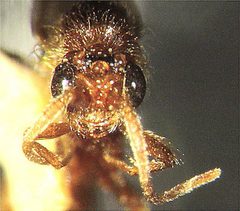
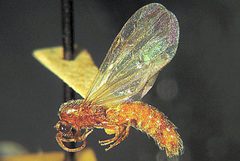
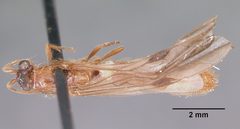
Pronunciation
How to pronounce Neivamyrmex melshaemeri: /ˌneɪvəˈmɜrmɛks mɛlˈʃaɪmɪri/
These audio files are automatically generated. While they are not always 100% accurate, they are a good starting point.
Identification
of Neivamyrmex are characterized by their elongated and streamlined bodies adapted for raiding. Males are winged and possess expanded to accommodate muscles, giving them a distinctive hump-backed appearance. Species-level identification within Neivamyrmex requires examination of morphological characters including mandible shape, pilosity patterns, and petiolar structure. N. melshaemeri can be distinguished from such as N. nigrescens and N. opacithorax by specific combinations of these traits, though precise diagnostic features require taxonomic resources.
Images
Distribution
Found in North America; specific range details for N. melshaemeri are poorly documented in available sources, though the Neivamyrmex occurs across much of the United States and into Mexico.
Seasonality
Colony relocations in warmer months occur primarily before dawn for approximately two weeks out of every month. In fall, emigrations shift to morning hours when temperatures permit, ceasing entirely during reliably cold periods.
Diet
Predatory on other ; raid nests of other ants to prey on larvae and pupae.
Life Cycle
Colonies are nomadic with periodic emigrations. The overwinters in sedentary phase. Winged males participate in mating , typically attracted to lights at night.
Behavior
Exhibits nomadic raiding typical of legionary ants. are primarily subterranean and during active foraging periods. Colony emigrations follow a predictable temporal pattern tied to temperature and season. Males are frequently observed at ultraviolet lights during evening hours.
Ecological Role
As a of other ants, contributes to dynamics and . Serves as for myrmecophilous beetles in the Ulkeus ( Histeridae), which are found exclusively in association with Neivamyrmex colonies.
Human Relevance
Males may be encountered by homeowners during swarming events and are sometimes mistaken for or other pests. The poses no direct threat to human structures or health.
Similar Taxa
- Neivamyrmex nigrescensSympatric legionary ant with similar and preferences; distinguished by specific morphological characters of and males.
- Neivamyrmex opacithoraxAnother North American legionary ant with overlapping range; requires detailed morphological examination for separation.