
Evaniella semaeoda
(Bradley, 1908)
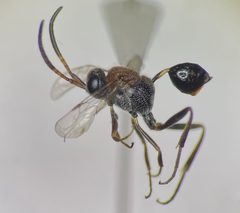
Evaniella semaeoda is a of ensign wasp ( Evaniidae) described by Bradley in 1908. It is known from the Caribbean and North America. Like other ensign wasps, it is likely associated with () as a , though specific biological details for this species remain poorly documented. The species is represented by relatively few observations.
Pronunciation
How to pronounce Evaniella semaeoda: /ɛ.vəˈnɪ.ə sə.meɪˈoʊ.də/
These audio files are automatically generated. While they are not always 100% accurate, they are a good starting point.
Identification
Evaniella semaeoda can be distinguished from other Evaniella by specific morphological features of the metasoma and wing venation, though detailed diagnostic characters require examination. Ensign wasps in the Evaniella generally have a laterally compressed, flag-like metasoma that is carried raised and perpendicular to the body, a characteristic trait. Accurate identification to species level typically requires reference to original descriptions and comparison with .
Images
Distribution
Caribbean Sea region and North America. Distribution records indicate presence in the Caribbean and North America, though specific countries or localities are not well documented in available sources.
Host Associations
- Cockroaches (Blattodea) - probable Evaniidae as a are specialized of (); this association is inferred for E. semaeoda based on family-level but has not been directly documented
Ecological Role
As a member of Evaniidae, likely functions as a agent of through of , though this has not been specifically demonstrated for this .
Human Relevance
Potential incidental of pest , though no direct evidence documents economic or health significance for this particular species.
Similar Taxa
- Other Evaniella speciesShare the characteristic ensign wasp body plan with elevated, laterally compressed metasoma; require detailed morphological examination for separation
- Other Evaniidae genera (Evania, Prosevania, etc.)Similar overall appearance and ; distinguished by genitalic and wing venation characters