
Evaniella californica
(Ashmead, 1901)
ensign wasp
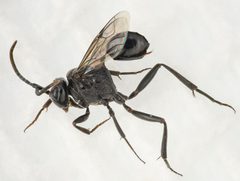
Evaniella californica is a of ensign in the Evaniidae, first described by William Harris Ashmead in 1901. The species is to North America and represents one of approximately 20 recognized species in the Evaniella. Ensign wasps are characterized by their distinctive metasomal and are known for their association with as for larval development. The specific epithet "californica" suggests the type locality or primary distribution is associated with California, though records indicate broader North American occurrence.
Pronunciation
How to pronounce Evaniella californica: /ɛvəˈniːə kælɪˈfɔrnɪkə/
These audio files are automatically generated. While they are not always 100% accurate, they are a good starting point.
Images
Distribution
North America; presence recorded in North America per GBIF and iNaturalist databases. The specific epithet "californica" indicates California as the type locality or region of initial description, though the full extent of the range within North America requires further documentation.
Host Associations
- cockroach oothecae - larval Evaniidae larvae are obligate of (); specific records for E. californica are not documented in available sources but inferred from -level
Similar Taxa
- other Evaniella speciescongeneric share the characteristic ensign including the laterally compressed metasoma with petiolar attachment; precise differentiation requires examination of specific morphological characters not detailed in available sources
- other Evaniidae genera (Evania, Prosevania, etc.)-level synapomorphies including the (flag-like) metasoma and reduced wing venation; generic assignment based on antennal structure, , and petiolar attachment details
More Details
Taxonomic history
Described by William Harris Ashmead in 1901, a prominent American entomologist who made substantial contributions to Hymenoptera . The original description and details would be found in Ashmead's publications from the early 1900s.
Data limitations
Available sources provide minimal biological information beyond taxonomic placement and geographic occurrence. The single iNaturalist observation suggests the is rarely encountered or underreported, or may reflect taxonomic uncertainty in field identification.
Sources and further reading
- BugGuide
- Wikipedia
- GBIF taxonomy match
- iNaturalist taxon
- Catalogue of Life
- The Big 43: The California Native Plants, Plus One, Studied in UC Davis Research | Bug Squad
- Bohart Museum: Learn about California's State Insect on UC Davis Picnic Day | Bug Squad
- A Mural Like No Other | Bug Squad
- A Flash of Orange: Welcome, California Tortoiseshell! | Bug Squad
- California Dogface Butterfly: What the Fire Did | Bug Squad
- Bembicid Holdings | Entomology Research Museum