
Neodiprion rugifrons
Middleton, 1933
Redheaded Jack Pine Sawfly
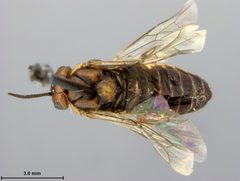
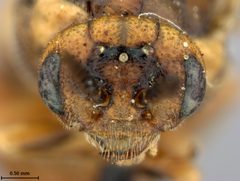
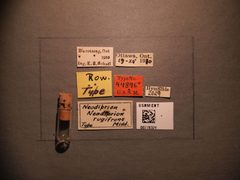
Neodiprion rugifrons is a pine in the Diprionidae that specializes on jack pine (Pinus banksiana). Larvae exhibit a distinctive feeding : they consume only mature needles and avoid foliage due to a chemical deterrent, 13-keto-8(14)-podocarpen-18-oic acid, present in young needles. The has two per year in its Wisconsin , with second-generation larvae accepting 90-day-old foliage by September. are stingless barely noticeable in the field.
Pronunciation
How to pronounce Neodiprion rugifrons: //ˌniːoʊdaɪˈpraɪən ˌruːdʒɪˈfrɒnz//
These audio files are automatically generated. While they are not always 100% accurate, they are a good starting point.
Images
Habitat
Jack pine stands; deep, dry sand associated with pine forests.
Distribution
Wisconsin, USA; Canada (Manitoba, Ontario).
Seasonality
Two per year; second-generation larvae active through September in Wisconsin.
Diet
Mature needles of jack pine (Pinus banksiana); specifically avoids foliage early in the growing season due to chemical deterrents.
Host Associations
- Pinus banksiana - obligate Jack pine; larvae feed exclusively on mature needles of this
Life Cycle
Two per year; larvae are gregarious and feed together. Young larvae feed on needles by consuming about half the needle length, leaving a dry sliver; older larvae consume entire needles.
Behavior
Gregarious feeding during larval stage; highly specific feeding timing based on chemical cues from foliage.
Ecological Role
Foliage-feeding herbivore on conifers; serves as food for birds and supports natural enemy .
Human Relevance
Occasional pest of jack pine in managed and natural forests; rarely requires chemical intervention due to natural enemy regulation.
Similar Taxa
- Neodiprion swaineiAlso feeds on jack pine with similar chemical-based feeding to mature foliage only; distinguished by timing of needle acceptance (N. swainei accepts 60-day-old foliage by August vs. 90-day-old for N. rugifrons)
- Neodiprion leconteiAnother in same ; differs in preferences and larval coloration
- Neodiprion comparSympatric ; differs in larval coloration and associations
Sources and further reading
- BugGuide
- GBIF taxonomy match
- iNaturalist taxon
- NCBI Taxonomy
- What's Eating Your Pine Needles? Sawflies, Probably
- Cicindela scutellaris lecontei x scutellaris unicolor intergrades in southeast Missouri | Beetles In The Bush
- Chemical Basis for Feeding Adaptation of Pine Sawflies Neodiprion rugifrons and Neodiprion swainei
- The Biology of Neodiprion rugifrons (Hymenoptera: Diprionidae), a Sawfly Infesting Jack Pine in Wisconsin1