
Monelata
Förster, 1856
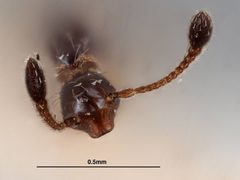
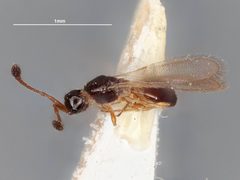
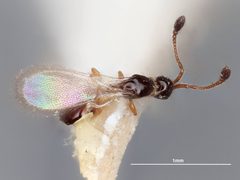
Monelata is a of minute in the Diapriidae, first described by Förster in 1856. These tiny wasps are members of the Proctotrupomorpha, a group characterized by reduced wing venation and often abbreviated . The genus has been recorded from northern Europe, with confirmed observations in Denmark, Norway, and Sweden. As with most diapriids, in this genus are likely parasitoids of Diptera larvae, though specific associations remain poorly documented.
Pronunciation
How to pronounce Monelata: /ˌmɒnəˈlɑːtə/
These audio files are automatically generated. While they are not always 100% accurate, they are a good starting point.
Identification
Members of Monelata can be distinguished from other diapriid by features of the mesosoma and metasoma, though precise diagnostic characters require microscopic examination. The genus lacks the extreme modifications seen in some diapriid groups such as Belytinae. Identification to level is challenging and generally requires reference to original descriptions and . The small size (typically under 5 mm) and reduced wing venation with few closed are consistent with the Diapriidae but do not alone distinguish Monelata from related genera.
Images
Distribution
Recorded from Denmark, Norway, and Sweden. The appears restricted to northern Europe based on available data, though this may reflect limited sampling effort rather than true . No records are known from outside Scandinavia.
Ecological Role
As members of Diapriidae, in this likely function as of dipteran larvae, contributing to of fly in their . The is known for attacking larvae in concealed environments such as soil, leaf litter, and decaying organic matter.
Similar Taxa
- TrichopriaAnother in Diapriidae with similar size and general habitus; distinguished by differences in antennal structure and mesosomal
- DiapriaType of the with overlapping distribution; separated by wing venation details and metasomal form
More Details
Taxonomic history
The was established by Arnold Förster in 1856 in his work on Hymenoptera. Modern revisionary work on Monelata is limited, and the genus has not been subject to comprehensive phylogenetic analysis.
Data limitations
Only 61 observations are recorded in iNaturalist, and the lacks a Wikipedia entry. This reflects the difficulty of observing and identifying these minute in the field.