
Phanacis hypochoeridis
(Kieffer, 1887)
Catsear Gall Wasp
Phanacis hypochoeridis is a gall wasp in the Cynipidae. It induces galls on plants in the Asteraceae family, specifically on catsear (Hypochaeris radicata) and related . The species is native to Europe and has been introduced to other regions including Oceania. As a gall-former, it manipulates plant tissue to create a protective structure for its developing larvae.
Pronunciation
How to pronounce Phanacis hypochoeridis: /fəˈnæsɪs haɪpoʊˈkɛrɪdɪs/
These audio files are automatically generated. While they are not always 100% accurate, they are a good starting point.
Identification
Identification requires examination of the galls formed on plants. Galls appear on stems or leaves of Hypochaeris . are small, typically 2-4 mm in length, with reduced wing venation characteristic of Cynipidae. Accurate identification to species level usually requires examination of morphological features or gall characteristics.
Images
Habitat
Found in supporting its plants, including grasslands, meadows, roadsides, and disturbed areas where Hypochaeris radicata and related Asteraceae occur.
Distribution
Native to Europe and northern Asia. Introduced to Oceania including New Zealand and Australia. GBIF records indicate presence in Europe, northern Asia (excluding China), and Oceania.
Host Associations
- Hypochaeris radicata - Primary ; gall formation occurs on stems and leaves
- Hypochaeris glabra - Secondary
Life Cycle
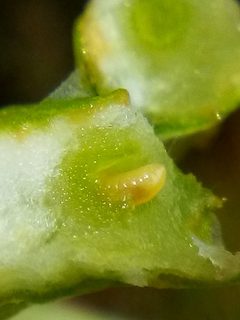
Females oviposit into plant tissue, inducing gall formation. Larvae develop within the gall, feeding on plant tissue. Development occurs entirely within the gall structure. timing varies by region; typically spring to summer in temperate zones. details for specific are incompletely documented.
Ecological Role
As a gall-former, modifies plant growth patterns and creates microhabitats used by other organisms. Galls may serve as food sources or shelter for and . Contributes to plant-herbivore dynamics in grassland .
Human Relevance
Minor economic significance. May be encountered in agricultural or horticultural settings where plants occur. Occasionally studied as a agent for Hypochaeris in regions where these plants are weeds.
Similar Taxa
- Phanacis centaureaeAlso in Phanacis; induces galls on Centaurea rather than Hypochaeris
- Aulacidea hieraciiAnother cynipid gall wasp on Asteraceae; plant association differs (Hieracium vs. Hypochaeris)
- Uroleucon hypochoeridis with similar association (Hypochaeris) but different order (Hemiptera); not a gall-former
More Details
Taxonomic History
Originally described as Aulax hypochoeridis by Kieffer in 1887, later transferred to Phanacis. The genus Phanacis currently contains approximately 20 , primarily gall-formers on Asteraceae.
Gall Morphology
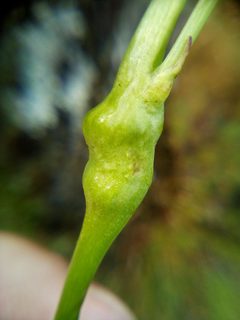
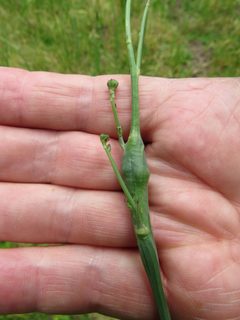
Galls are typically spindle-shaped or irregular swellings on stems, or less commonly on leaf midribs. Gall color ranges from green to purplish when young, becoming brown with age. Size varies but generally 10-30 mm in length.
Sources and further reading
- BugGuide
- GBIF taxonomy match
- iNaturalist taxon
- NCBI Taxonomy
- Death to aphids: Brown ambrosia aphid, Uroleucon ambrosiae and other assorted aphids meet flower fly larvae, Syrphidae — Bug of the Week
- Cup plant feeds brown ambrosia aphid, Uroleucon ambrosiae, which in turn provides dinner for lynx spiders, lady beetles, long-legged flies, flower flies, and green lacewings — Bug of the Week