
Phylloteras volutellae
conical oak gall wasp
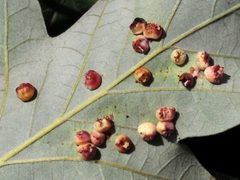
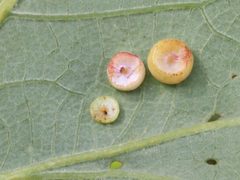
Phylloteras volutellae is a cynipid gall wasp native to North America that induces distinctive conical galls on the leaves of white oaks (Quercus section Quercus). The is best known for the detachable, clustered galls formed on leaf undersides, each housing a single larva. emerge in early January, though adult remains undescribed.
Pronunciation
How to pronounce Phylloteras volutellae: /ˌfɪloʊˈtɛrəs ˌvoʊluˈtɛlaɪ/
These audio files are automatically generated. While they are not always 100% accurate, they are a good starting point.
Identification
Identified by the conical, detachable galls formed on the undersides of white oak leaves, often appearing in clusters. Each gall is concave at the top and contains a single larva. Galls are -specific to this . wasps are undescribed; identification relies on gall and association.
Images
Habitat
Associated with white oak including bur oak (Quercus macrocarpa) and swamp white oak (Quercus bicolor). Galls develop on living leaf tissue.
Distribution
North America.
Seasonality
emerge from galls in early January. Gall formation timing on leaves not specified in sources.
Diet
Larvae develop within plant tissue of white oak leaves; specific feeding mechanism not described. diet unknown.
Host Associations
- Quercus macrocarpa - bur oak
- Quercus bicolor - swamp white oak
Life Cycle
Induces galls on white oak leaves; each gall contains a single larva. emerge from galls in early January. Details of -laying, larval development duration, and not described.
Ecological Role
Similar Taxa
- Other Phylloteras speciesAlso induce galls on oak leaves; distinguished by gall (conical shape with concave top) and specificity to white oaks.
- Other Cynipini on white oaksMany cynipids form leaf galls on oaks; P. volutellae distinguished by its specific conical, detachable gall form and clustered arrangement on leaf undersides.