Druon ignotum
(Bassett, 1881)
Druon ignotum is a gall wasp that induces galls on white oaks in central and eastern North America. The exhibits a complex with alternating sexual and , each producing morphologically distinct galls. First described as Cynips ignota in 1881, it has undergone several taxonomic revisions before its current placement in Druon.
Pronunciation
How to pronounce Druon ignotum: /ˈdru.oʊn ɪgˈnoʊ.təm/
These audio files are automatically generated. While they are not always 100% accurate, they are a good starting point.
Identification
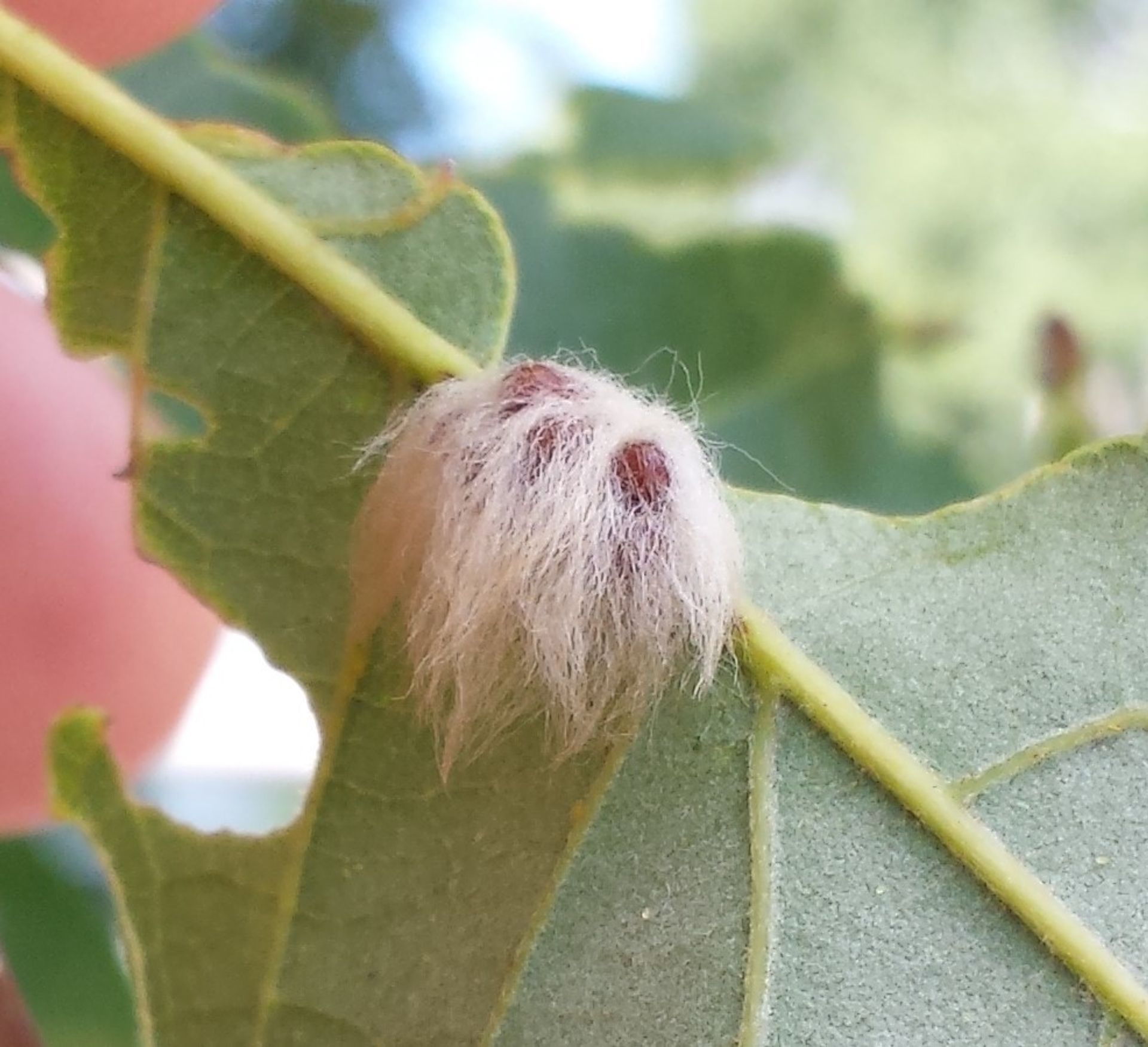
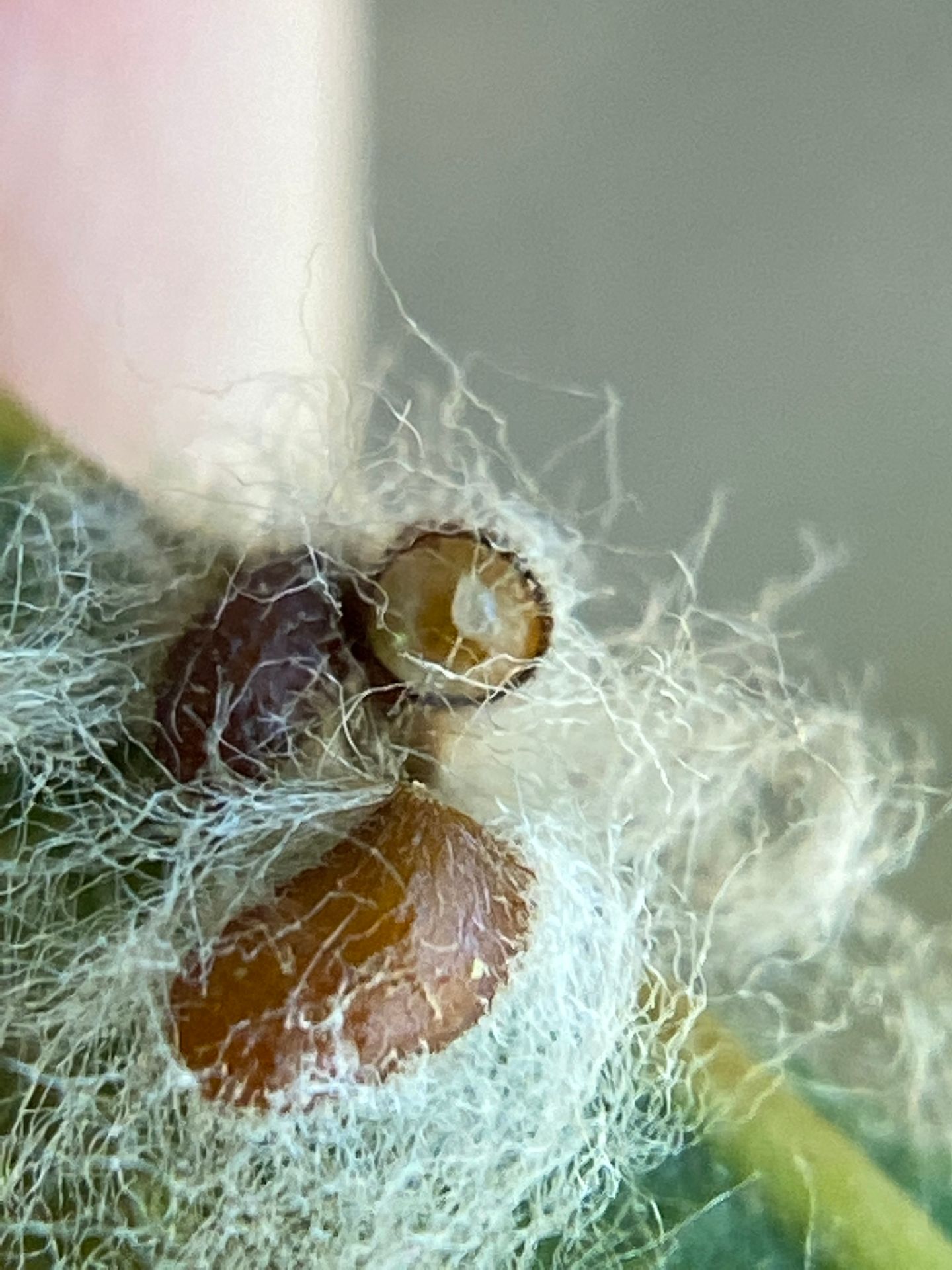
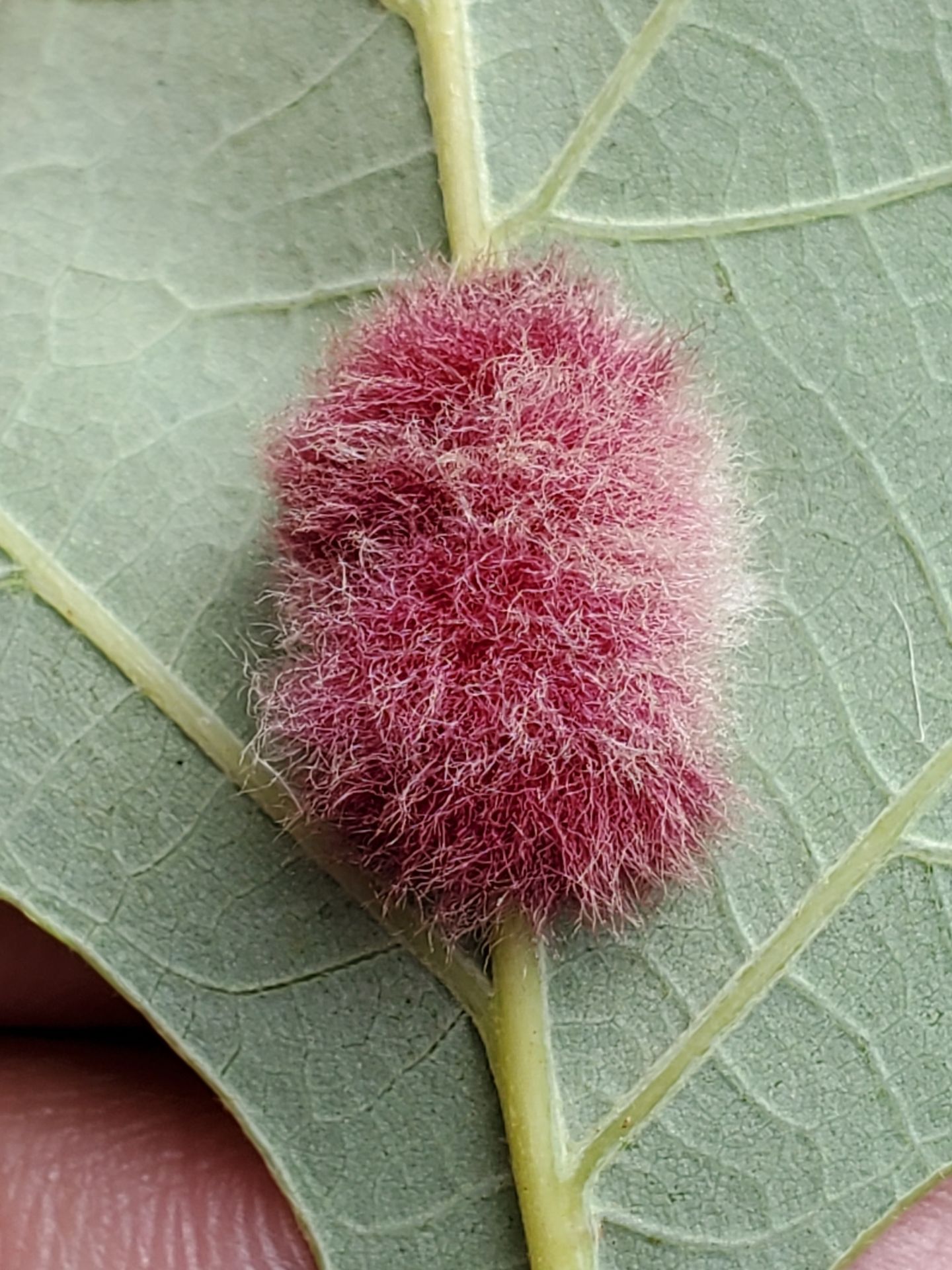
Agamic galls can be distinguished by their clustered arrangement along leaf , woolly hair covering, and location on the underside of white oak leaves. The color change of the woolly covering from cream/pink to brown over winter provides a seasonal diagnostic cue. Sexual generation galls are cryptic and require dissection of buds to detect. Druon ignotum is distinguished from other oak gall wasps by its specific association with white oaks (Quercus sect. Quercus) and the particular of its agamic galls.
Images
Habitat
Found in forests and woodlands where white oaks (Quercus alba and related ) occur. trees include bur oak, swamp white oak, overcup oak, and post oak.
Distribution
Central and eastern North America. Documented from USA: Massachusetts, Connecticut, Illinois, Minnesota, Nebraska; Canada: Alberta, Manitoba, Ontario.
Seasonality
Agamic females emerge from overwintered galls early in spring. Sexual emerge later, with timing dependent on bud development. The two per year result in spring activity for the sexual generation and summer-to-fall development of the agamic generation.
Host Associations
- Quercus macrocarpa - gall inductionbur oak; agamic
- Quercus bicolor - gall inductionswamp white oak; agamic
- Quercus lyrata - gall inductionovercup oak; agamic
- Quercus stellata - gall inductionpost oak; agamic
Life Cycle
Heterogonic with two alternating per year. The agamic (parthenogenetic) generation produces galls on leaf undersides; females emerge in spring and oviposit in oak buds. This induces sexual generation galls within buds and young shoots. Sexual of both sexes emerge, mate, and mated females oviposit on leaf undersides to induce the next agamic generation.
Behavior
Females of the agamic exhibit precise -finding , locating oak buds for oviposition after from overwintered galls. Mated females of the sexual generation target the underside of oak leaves for oviposition.
Ecological Role
Induces structurally distinct galls on white oaks, creating microhabitats that may be utilized by other organisms. The woolly agamic galls may provide shelter for or , though specific associates are not documented.
Human Relevance
No documented economic or medical significance. The galls cause minimal damage to trees and are primarily of interest to entomologists and naturalists studying gall wasp .
Similar Taxa
- Other Druon speciesSimilar gall and associations; precise identification requires examination of gall structure and host specificity
- Other Cynipidae on white oaksMany oak gall wasps induce galls on similar ; Druon ignotum is distinguished by the woolly, clustered, -associated agamic galls
More Details
Taxonomic history
Originally described by Homer Franklin Bassett as Cynips ignota in 1881, this has been transferred among multiple before its recent placement in Druon by Cuesta-Porta, Melika, Nicholls, Stone & Pujade-Villar in 2022.
Gall development
The agamic gall's woolly covering is initially cream- or pink-colored and becomes brown over winter; this color change may serve protective or camouflage functions.