
Callirhytis gallaestriatae
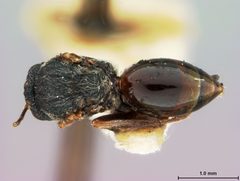
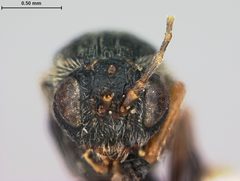
Callirhytis gallaestriatae is a of gall wasp in the Cynipidae. As with other members of this , it induces galls on oak (Quercus species). The species exhibits the complex typical of many cynipids, with alternating sexual and that often produce morphologically distinct galls. The specific epithet "gallaestriatae" suggests association with galls bearing striations or stripes.
Pronunciation
How to pronounce Callirhytis gallaestriatae: //kəˈlɪrɪtɪs ˌɡæləstrɪˈɑːtaɪ//
These audio files are automatically generated. While they are not always 100% accurate, they are a good starting point.
Images
Habitat
Associated with oak-dominated environments where trees occur.
Distribution
Distribution details are not well documented in available sources; likely occurs in regions where suitable oak are present.
Host Associations
- Quercus - gall induction ; specific oak not confirmed in available sources
Life Cycle
Exhibits heterogony with alternating sexual and , a characteristic pattern in the Callirhytis. The two generations typically produce different gall morphologies on the same or different plant tissues.
Ecological Role
As a gall inducer, modifies plant tissue to create protected microhabitats for larval development. These galls may serve as resources for other organisms including and .
Similar Taxa
- Callirhytis clavulaSame ; produces oak galls but differs in gall and
- Callirhytis quercuspunctataSame ; induces gouty oak galls with distinct structural characteristics
- AntistrophusSame (Cynipidae) but different association (Silphium rather than Quercus) and gall