
Callirhytis furva
Callirhytis furva is a of gall wasp in the Cynipidae. Like other members of the Callirhytis, it induces galls on oak trees (Quercus spp.). The species exhibits the complex typical of many cynipid , with alternating sexual and that often produce distinct gall morphologies on different plant tissues.
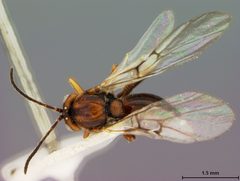
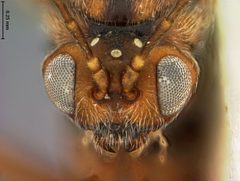
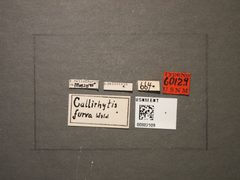
Pronunciation
How to pronounce Callirhytis furva: /kælɪˈraɪtɪs ˈfɜːrvə/
These audio files are automatically generated. While they are not always 100% accurate, they are a good starting point.
Identification
Distinguished from other Callirhytis by gall characteristics and association. The specific gall induced by C. furva differs from that of C. quercuspunctata (gouty oak gall) and C. clavula. Accurate identification typically requires examination of the gall structure, location on the host plant, and seasonal timing, with voucher specimens needed for definitive determination.
Images
Habitat
Associated with oak-dominated , including forests, woodlands, and areas where oak occur.
Distribution
North America; specific range details require confirmation from primary sources.
Seasonality
Activity patterns follow the typical cynipid bimodal distribution, with distinct spring (sexual) and summer/fall () . Exact timing varies with geographic location and local climate conditions.
Diet
Larvae feed on nutritive tissue within the gall induced on oak plants. do not feed; they rely on larval energy reserves.
Host Associations
- Quercus - Specific oak associations require verification from primary literature.
Life Cycle
Exhibits heterogony () with distinct sexual and parthenogenetic . The sexual generation typically produces small, often inconspicuous galls, while the generation produces larger, more prominent galls. Larval development occurs entirely within the gall tissue.
Behavior
Females oviposit into oak tissue, inducing gall formation through chemical manipulation of plant growth. Larvae develop within the protective gall structure, which provides nutrition and shelter.
Ecological Role
As a gall inducer, modifies oak plant tissue and creates microhabitats that may be exploited by , , and other associated organisms. Contributes to the complex structure of oak-associated arthropods.
Human Relevance
Of minor economic significance; galls may cause aesthetic damage to ornamental oaks but rarely cause serious harm to tree health. Occasionally of interest to naturalists and gall researchers.
Similar Taxa
- Callirhytis quercuspunctataAlso induces galls on oaks, but produces distinct 'gouty oak gall' on twigs rather than the gall form associated with C. furva.
- Callirhytis clavulaSimilar oak-associated cynipid, but produces galls with different texture and latex characteristics; galls become woody rather than remaining succulent.
- AntistrophusSame (Cynipidae) but associated with rosinweed (Silphium) rather than oaks; galls are stem-based and succulent with visible latex.
More Details
Taxonomic Note
The Callirhytis has undergone taxonomic revision; some sources may list under alternate . Current classification follows recent phylogenetic work in Cynipidae.
Research Gap
Detailed and specificity data for C. furva specifically are limited in publicly available literature; much information is inferred from -level studies or congeneric .