
Bassettia flavipes
(Gillette, 1889)
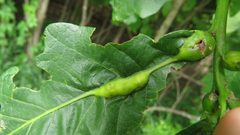
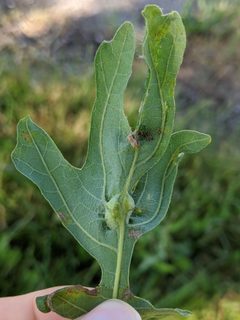
Bassettia flavipes is a gall wasp in the Cynipidae that induces galls on oaks, particularly Quercus macrocarpa (bur oak). This exhibits an between sexual and forms, a trait now confirmed through molecular data. It was originally described from the sexual by Gillette in 1889 and was later transferred from the Neuroterus to Bassettia based on genetic and morphological evidence. The species is distributed across the northern United States and southern Canada.
Pronunciation
How to pronounce Bassettia flavipes: //bæˈsɛtiə ˈfleɪvaɪpiːz//
These audio files are automatically generated. While they are not always 100% accurate, they are a good starting point.
Identification
Identification to level requires examination of galls and/or , with molecular confirmation recommended due to the historical confusion between sexual and . The species was previously placed in Neuroterus but was reclassified to Bassettia based on cytb and ITS2 sequence divergence (approximately 8.24% and 6.64% respectively from the congeneric B. pallida). Gall characteristics on bur oak (Quercus macrocarpa) provide field identification cues, though these differ between generations.
Images
Appearance
are small typical of cynipid gall wasps. The specific epithet 'flavipes' refers to yellow legs, a characteristic feature. Sexual and differ in and gall type, as is common in cynipids with alternating generations. Detailed morphological descriptions of adults are limited in available sources.
Habitat
Associated with oak woodlands and urban plantings where oaks occur. In Canada, galls have been observed on both introduced bur oaks in Alberta and native bur oaks in Manitoba and Quebec.
Distribution
United States: Illinois, Indiana, Iowa, Minnesota, North Dakota, Virginia. Canada: Alberta, Manitoba, Ontario, Quebec.
Host Associations
- Quercus macrocarpa - gall inductionPrimary ; galls occur on both introduced and native of bur oak.
Life Cycle
Exhibits heterogonic with alternating sexual and . The sexual generation was first described by Gillette in 1889; the asexual generation was tentatively identified by Ives & Wong (1988) and later confirmed through sequencing by Nicholls et al. (2022). Molecular data (cytb and ITS2 sequences) definitively linked the two generations for the first time.
Ecological Role
As a gall inducer, modifies plant tissue to create protected microhabitats for larval development. The ecological impacts of these galls on oak and interactions have not been quantified.
Human Relevance
No direct economic or medical significance reported. Presence in urban and suburban oaks may contribute to local biodiversity.
Similar Taxa
- Bassettia pallidaCongeneric ; distinguished by molecular divergence (8.24% cytb, 6.64% ITS2) and gall characteristics.
- Neuroterus speciesHistorically confused with B. flavipes due to previous classification in that ; reclassification to Bassettia based on genetic and morphological data.
More Details
Taxonomic History
Originally described as Neuroterus flavipes by Gillette (1889). Reclassified to Bassettia by Nicholls, Melika, Digweed & Stone (2022) based on molecular phylogenetic analysis using cytb and ITS2 markers.
Molecular Confirmation
The first definitive linking of sexual and used four individuals (two asexual females, two sexual females) sequenced for both cytb and ITS2. Cytb sequences showed 0–0.92% divergence within ; ITS2 showed 0–0.60% divergence with three indels.
Sources and further reading
- BugGuide
- GBIF taxonomy match
- iNaturalist taxon
- NCBI Taxonomy
- Ice dams, wet wood, and termites - Reticulitermes flavipes — Bug of the Week
- What lies beneath the mulch? Formosan termite, Coptotermes formosanus, and Eastern subterranean termite, Reticulitermes flavipes — Bug of the Week
- How to raise a crop of termites: Eastern subterranean termites, Reticulitermes flavipes — Bug of the Week
- From the Bug of the Week mailbag, termites or ants? Eastern subterranean termites, Reticulitermes flavipes, or Citronella ants, Lasius sp. — Bug of the Week
- Polydesmida | Beetles In The Bush
- New Method Makes for Faster Genetic ID of Eastern U.S. Termites