
Bassettia
Ashmead, 1887
Species Guides
1Bassettia is a of gall wasps in the Cynipidae, restricted to North America. The genus was established by William Harris Ashmead in 1887, named in honor of H. F. Bassett, an amateur entomologist who contributed significantly to the study of gall wasps. As of 2007, the genus comprises nine recognized distributed across the United States from Connecticut to California, with one species extending into Panama. These induce galls on oak trees (Quercus species), with each species typically associated with specific plants and geographic regions.
Pronunciation
How to pronounce Bassettia: /bæsˈɛtiə/
These audio files are automatically generated. While they are not always 100% accurate, they are a good starting point.
Identification
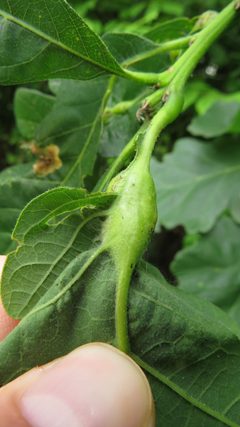
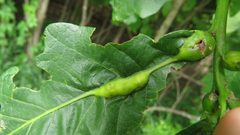
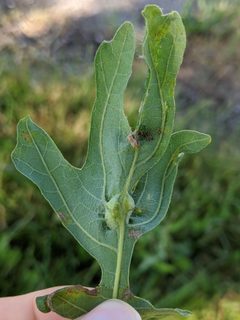
Bassettia are distinguished from related primarily by gall and plant associations. The genus was revised in 2007 by Melika and Abrahamson, who clarified species boundaries and transferred several former species to Callirhytis. Species-level identification requires examination of gall structure, location on host plant (leaf, stem, bud, or twig), and microscopic features of . The type species, B. floridana, serves as a reference for genus-level characteristics.
Images
Habitat
occur in oak-dominated including deciduous forests, scrublands, and urban areas where Quercus species are present. Specific habitat associations vary by species: B. floridana occurs in Connecticut and Florida; B. ligni in California and Oregon oak woodlands; B. tenuana in New Mexico; and B. caulicola in Panama.
Distribution
North America, ranging from the eastern United States (Connecticut, Virginia, District of Columbia) through the Midwest (Missouri, Illinois) to the Southwest (Arizona, New Mexico) and West Coast (California, Oregon). One , B. caulicola, extends into Panama. Species distributions are generally or parapatric, with limited overlap.
Diet
do not feed; larvae develop within plant galls, obtaining nutrition from oak tissue. Specific gall locations vary by and may include leaves, stems, buds, or twigs.
Host Associations
- Quercus - All induce galls on oak trees; specific species associations vary and are incompletely documented for some Bassettia species.
Life Cycle
Like other cynipid , Bassettia exhibit a complex with alternating sexual and . Sexual generation females lay in oak tissue, inducing gall formation. Larvae develop within galls, with development time varying by species and environmental conditions. emerge from galls to mate and initiate the next generation. Some species may have extended periods.
Behavior
are short-lived and primarily focused on . Females oviposit into oak tissue, triggering the plant to form a protective gall structure around the developing larva. The specific stimuli and mechanisms of gall induction have not been experimentally characterized for most .
Ecological Role
As gall inducers, these create microhabitats that support specialized of , , and hyperparasitoids. Galls may alter resource allocation in oaks, though impacts are generally minor at the tree level. The wasps contribute to biodiversity of oak-associated communities.
Human Relevance
No direct economic importance. The honors H. F. Bassett, an early American contributor to cynipid . Galls may be noticed by naturalists and arborists but do not cause significant damage to ornamental or timber oaks.
Similar Taxa
- CallirhytisSeveral formerly placed in Bassettia were transferred to Callirhytis by Melika and Abrahamson in 2002. These differ in gall and morphological characters; Callirhytis species often produce larger, more structurally complex galls.
- CynipsB. tenuicornis was originally described in Cynips before Bassettia was erected. Cynips are primarily Palearctic and produce distinct gall types, often on Quercus robur and related white oaks.
More Details
Taxonomic history
The was established in 1887 with two : B. floridana (newly described) and B. tenuicornis (transferred from Cynips). A 2007 revision by Melika and Abrahamson recognized eight species and added three new species (B. archboldi, B. virginiana, B. weldi). B. caulicola was described from Panama in 2010, representing the only Neotropical species.
Etymology
Named by Ashmead after H. F. Bassett of Waterbury, Connecticut, who collected and described numerous cynipid in the late 19th century.