
Andricus weldi
Andricus weldi is a of cynipid gall wasp in the Cynipidae. Like other members of this diverse family, it induces the formation of specialized plant galls on oak . The species was named in honor of Lewis H. Weld, a prominent American cynipidologist who authored foundational works on gall wasps of the eastern United States. Specific details regarding its gall , host associations, and remain limited in the available literature.
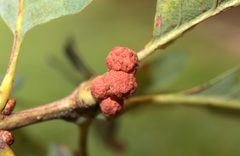
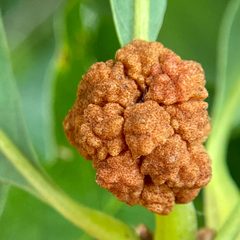
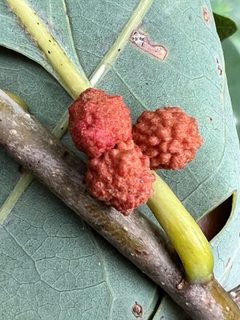
Pronunciation
How to pronounce Andricus weldi: //ˈændrɪkəs ˈwɛldi//
These audio files are automatically generated. While they are not always 100% accurate, they are a good starting point.
Identification
Identification requires examination of the gall structure induced on oaks and subsequent rearing of . No published diagnostic features distinguishing adult Andricus weldi from have been identified in available sources.
Images
Habitat
Associated with oak-dominated forests where trees occur. Specific preferences beyond host presence have not been documented.
Distribution
Eastern North America. Precise range boundaries have not been established in available literature.
Diet
Larvae feed internally within plant galls induced on oak tissue. do not feed; their mouthparts are non-functional.
Host Associations
- Quercus - gall inductionSpecific within Quercus have not been definitively established in available sources.
Life Cycle
As with other cynipid gall wasps, the involves deposition into oak tissue, gall induction by larval secretions, larval development within the gall, in a chamber within the gall, and through an exit hole. The presence of males and details of reproductive mode (sexual vs. parthenogenetic) have not been documented for this .
Ecological Role
Gall induction creates specialized microhabitats that may be utilized by , , and other associated organisms. The contributes to the complex structure of oak-associated insects.
Human Relevance
No direct economic or medical significance. Of interest to entomologists studying gall wasp diversity and oak-insect interactions.
Similar Taxa
- Andricus dimorphusAnother Andricus inducing galls on oak leaves; specific differences in gall and preference would distinguish the two, though these have not been explicitly compared for A. weldi.
- Andricus pattoniCongeneric oak gall wasp with distinct gall ; A. pattoni produces galls on the abaxial leaf surface of post oak (Quercus stellata).
More Details
Etymology
The specific epithet weldi honors Lewis H. Weld (1880–1965), author of "Cynipid Galls of the Eastern United States" (1959), a seminal reference work on North American gall wasps.
Sources and further reading
- BugGuide
- iNaturalist taxon
- Gall darn it! Gall insects on hickory, oak, and elm, Phylloxera caryaecaulis, Andricus palustris, Colopha ulmicola — Bug of the Week
- Cover Photo—The Coleopterists Bulletin 67(3) | Beetles In The Bush
- Cynipidae | Beetles In The Bush
- The Insects Behind the Weird Growths on Plants
- Ted C. MacRae | Beetles In The Bush | Page 8