
Andricus pisiformis
Beutenmüller, 1911
Andricus pisiformis is a of cynipid gall wasp in the tribe Cynipini, first described by Beutenmüller in 1911. Like other members of its , this induces characteristic galls on oak trees (Quercus spp.). The species name 'pisiformis' refers to the pea-like shape of the galls it produces. As with many Andricus species, it exhibits a complex typically involving alternation between sexual and on different oak or plant parts, though specific details for this species remain incompletely documented.
Pronunciation
How to pronounce Andricus pisiformis: //ænˈdraɪkəs ˌpaɪsɪˈfɔrmɪs//
These audio files are automatically generated. While they are not always 100% accurate, they are a good starting point.
Identification
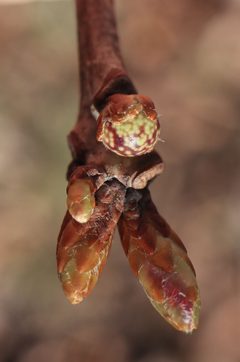
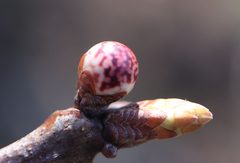
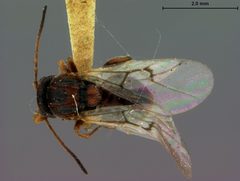
Galls of A. pisiformis are distinguished by their small, rounded, pea-like shape (hence the specific epithet), typically forming on oak leaves or petioles. The galls are generally smooth, greenish when young, becoming brownish with age, and detach relatively easily from the leaf. They may occur singly or in small clusters. Accurate identification to level requires examination of gall , oak species, and microscopic examination of characters including segmentation and wing venation patterns. Similar pea-shaped galls on oaks may be produced by other Andricus species or related cynipid , necessitating careful comparison with known host associations and gall microstructure.
Images
Habitat
Found in deciduous forests, woodlands, and urban areas where oak trees occur. The requires mature oak trees for gall induction, with quality dependent on oak abundance and diversity. Specific microhabitat preferences related to position or forest structure are not documented for this .
Distribution
Documented from eastern North America, with records from the northeastern United States. The ' range appears to correspond with that of its primary oaks, though precise distribution boundaries remain incompletely mapped. iNaturalist observations suggest occurrence across the northeastern and mid-Atlantic states, with potential range extension into adjacent Canadian provinces.
Seasonality
timing is not precisely documented for this . Based on related Andricus species, sexual adults likely emerge in spring (April–May), with generation emerging in late summer to fall (August–October). Gall development on leaves would be visible from late spring through summer.
Host Associations
- Quercus - gall inductionSpecific oak not definitively established; likely associated with white oak group (Quercus sect. Quercus) based on -level patterns.
Life Cycle
follows the typical cynipid pattern of heterogony, alternating between a sexual and a parthenogenetic () generation. The sexual generation produces galls on one oak or tissue type, while the asexual generation produces morphologically distinct galls, often on a different or plant part. In A. pisiformis, the pea-shaped galls are presumably produced by one generation, with the alternate generation's gall form undocumented. Larvae develop within galls, feeding on nutritive tissue induced by their secretions. occurs within the gall, with emerging through a small exit hole.
Behavior
Females use their ovipositor to insert directly into oak leaf or petiole tissue, initiating gall formation. The precise stimuli triggering gall induction involve chemical secretions that manipulate plant developmental . are short-lived and do not feed; their primary activity is mate location (sexual ) or to oviposition sites ( generation).
Ecological Role
As a gall inducer, A. pisiformis functions as a herbivore that manipulates oak physiology for its own development. Galls may serve as microhabitats for secondary inhabitants () and , though specific associates are undocumented. The contributes to biodiversity in oak-dominated through its specialized host relationship and as a food source for natural enemies.
Human Relevance
No direct economic importance. Like most cynipid gall wasps, it does not cause significant damage to oak trees and requires no management. The galls may attract interest from naturalists and educators as examples of insect-plant interaction. The has no known role in or as a research model organism.
Similar Taxa
- Andricus quercuslanigeraAlso produces rounded, detachable leaf galls on oaks; requires microscopic examination of and precise gall measurements for separation.
- Andricus fullawayiSimilar pea-shaped galls on oaks; distinguished by gall surface texture and antennal segment proportions.
- Neuroterus spp.Some produce small spherical leaf galls; distinguished by gall position on leaf (typically -axil vs. petiole or midrib) and different gall wall structure.
More Details
Nomenclatural Note
The specific epithet 'pisiformis' (Latin: pea-shaped) directly describes the gall , a common naming convention in Andricus. The was described by William Beutenmüller in 1911, a period of extensive cynipid in North America.
Research Status
A. pisiformis is among the many North American cynipid for which modern revisionary work is lacking. Comprehensive documentation, precise associations, and detailed distribution records would benefit from targeted study using both field observations and methods.