
Amphibolips globulus
Beutenmüller, 1909
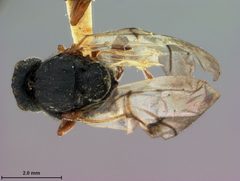
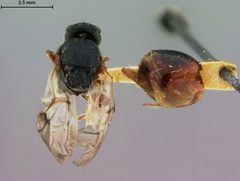
Amphibolips globulus is a of gall wasp in the Cynipidae, described by Beutenmüller in 1909. The species is associated with oak galls, a characteristic trait of the Amphibolips. It is part of a diverse radiation of cynipid that induce plant tissue modifications to serve as larval and food source.
Pronunciation
How to pronounce Amphibolips globulus: /æmˈfɪbəlɪps ˈɡlɒbjʊləs/
These audio files are automatically generated. While they are not always 100% accurate, they are a good starting point.
Images
Habitat
Found in association with oak trees (Quercus spp.), the plants for gall induction.
Distribution
North America; documented from the United States based on collection records and observations.
Host Associations
- Quercus - Oak serve as plants for gall induction
Life Cycle
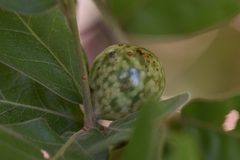
Has been observed to induce spherical galls on oak tissue; larval development occurs within the gall structure. Specific details of timing and voltinism are not well documented.
Ecological Role
As a gall inducer, modifies oak plant tissue to create microhabitats that may also serve as resources for other organisms (, ).
Similar Taxa
- Amphibolips quercusspongificaBoth produce spherical galls on oaks; differentiation requires examination of gall and microscopic features
- Other Amphibolips species members share oak gall association; -level identification relies on gall structure and rearing confirmation
More Details
Taxonomic Note
The Amphibolips has undergone taxonomic revision; some historical records may require verification against current classifications.
Observation Data
iNaturalist records (58 observations) suggest the is documented but not frequently encountered, possibly due to the specialized requirement and small size of the galls.