
Liposthenes glechomae
Linnaeus, 1758
Glechoma gall wasp
Liposthenes glechomae is a gall wasp in the Cynipidae that induces galls on its plant Glechoma hederacea (ground ivy). The is native to Europe and Northern Asia but has been introduced to North America, where both the and its host plant are considered . Research on this species has contributed to understanding gall induction mechanisms in cynipid wasps.
Pronunciation
How to pronounce Liposthenes glechomae: //lɪˈpɒsθəˌniːz ˈɡlɛkəˌmiː//
These audio files are automatically generated. While they are not always 100% accurate, they are a good starting point.
Identification
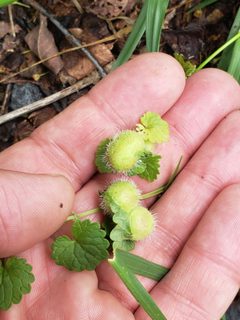
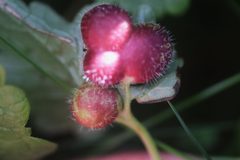
Galls induced by this begin as small red blemishes on foliage and develop into large green galls nearly as long as one of the plant's leaves. The itself is small and wasp-like, typical of Cynipidae, with specific identification requiring examination of morphological features not detailed in available sources.
Images
Habitat
Associated with Glechoma hederacea (ground ivy), a plant of woodland edges, hedgerows, and disturbed ground. In North America, found in where the introduced plant has established.
Distribution
Native to Europe and Northern Asia (excluding China). Introduced and established in North America.
Diet
Larvae feed within plant galls on tissues of Glechoma hederacea. do not feed; their role is and gall induction.
Host Associations
- Glechoma hederacea - Galls form on foliage. in North America.
Life Cycle
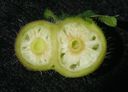
Females lay in plant tissue, inducing gall formation. Larvae develop within the protective gall enclosure. Research indicates that larval presence is necessary for continued gall growth—surgical removal of larvae caused gall growth to stop in this .
Behavior
Females induce gall formation through substances introduced during oviposition. The mechanism involves compounds that stimulate abnormal plant growth, though the specific compounds used by this are not definitively identified.
Ecological Role
As a gall inducer, modifies plant growth and tissue allocation. Creates microhabitats within galls that may be used by other organisms (, ), though specific associations for this are not documented.
Human Relevance
In North America, both the and its plant Glechoma hederacea are non-native . The wasp is not considered economically significant. Used in research on gall induction mechanisms.
Similar Taxa
- Other Liposthenes speciesSame , likely similar associations and gall ; differentiation requires detailed morphological study
- Other Cynipidae on LamiaceaeMay induce similar foliar galls on mint plants; plant association is primary distinguishing feature
More Details
Research significance
Liposthenes glechomae was used in a key study demonstrating that larval presence is required for continued gall growth, distinguishing it from some other gall wasps where gall induction occurs solely through maternal secretions at oviposition.