
Oxybelini
Leach, 1815
square-headed wasps
Genus Guides
2- Belomicrus
- Oxybelus(spiny digger wasps)
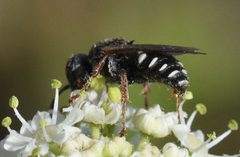
Oxybelini is a tribe of Crabronidae containing approximately 15 and over 440 described , commonly known as square-headed wasps. Members are specialized of flies, exhibiting a highly concentrated stinging pattern that targets the prey's with a single thoracic sting rather than the multiple stings typical of other digger wasps. This reduced stinging sequence correlates with the simplified nervous system of dipteran prey, which typically possess a single thoracic ganglionic mass.

Pronunciation
How to pronounce Oxybelini: /ˌɒksɪˈbɛlɪnaɪ/
These audio files are automatically generated. While they are not always 100% accurate, they are a good starting point.
Identification
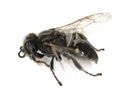
Members can be recognized by their square or flattened shape, a trait reflected in their . The tribe is distinguished within Crabroninae by this head combined with their specialized predatory on flies. Specific identification to or requires examination of additional morphological characters such as wing venation, abdominal structure, and male genitalia.
Images
Distribution
The tribe has a worldwide distribution with recorded across multiple continents, though precise range boundaries for the tribe as a whole are not well documented.
Diet
Specialized of flies (Diptera). Prey are captured, stung to induce paralysis, and provisioned in nests for larval consumption.
Life Cycle
Nesting includes excavating burrows in soil or utilizing pre-existing cavities. Females provision with paralyzed flies, laying a single per cell. Larvae develop on the provided prey, pupate, and emerge as .
Behavior
Hunting involves aerial pursuit of flies, followed by capture and a precise stinging pattern delivering a single thoracic sting behind one foreleg base. Unlike other digger wasps that deliver multiple stings to thoracic segments and neck, Oxybelini use an extremely reduced sequence matching the simplified of dipteran prey. Some species have been observed using the sting apparatus for prey carriage.
Ecological Role
of flies, contributing to regulation of dipteran . As solitary , they do not engage in social pollination but may incidentally visit flowers for nectar.
Human Relevance
Generally beneficial due to on flies, including potential pest . Not known to be aggressive toward humans; stings are used defensively only if handled. No significant economic impact documented.
Similar Taxa
- CrabroniniBoth are tribes within Crabroninae, but Crabronini typically hunt Orthoptera or other insects and deliver multiple thoracic stings plus a neck sting, contrasting with Oxybelini's single thoracic sting pattern and dipteran specialization.
- BembiciniAnother Crabroninae tribe with some fly-hunting members, but Bembicini generally have different and prey handling , often using the legs rather than the sting for prey transport.
More Details
Nervous system specialization
The reduced stinging pattern in Oxybelini represents a derived condition correlated with dipteran prey anatomy. Flies possess a single thoracic ganglionic mass rather than three separate thoracic ganglia, eliminating the need for multiple stings. This is considered an evolutionary reduction from the ancestral condition seen in orthopteran-hunting .