
Colletes fulgidus
Swenk, 1904
Glittering Cellophane Bee
Species Guides
1- Colletes fulgidus longiplumosus(Long-plumed Cellophane Bee)
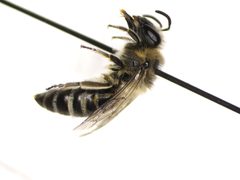
Colletes fulgidus is a of plasterer bee in the Colletidae, first described by Swenk in 1904. The species is known from North America, with records from the northeastern United States including Vermont. It is one of two recognized within the species, alongside C. f. longiplumosus. As a member of the Colletes, it shares the characteristic of lining underground with a cellophane-like secretion produced by abdominal glands.
Pronunciation
How to pronounce Colletes fulgidus: //kəˈliːtiːz ˈfʊlɡɪdəs//
These audio files are automatically generated. While they are not always 100% accurate, they are a good starting point.
Identification
Specific diagnostic features for distinguishing C. fulgidus from other North American Colletes are not documented in available sources. The C. f. longiplumosus is distinguished by notably long hairs, earning it the "long-plumed cellophane ."
Images
Distribution
North America; recorded from Vermont, United States.
Similar Taxa
- Colletes fulgidus longiplumosusRecognized distinguished by longer hairs.
- Colletes inaequalisSympatric vernal with similar spring and ground-nesting ; microscopic examination required for definitive identification.
- Colletes thoracicusSympatric vernal sharing similar preferences and seasonal activity; -level identification requires microscopic study.
More Details
Subspecies
Two are recognized: Colletes fulgidus fulgidus Swenk, 1904 (the nominate form) and Colletes fulgidus longiplumosus Stephen, 1954, distinguished by differences in hair length and plumosity.
Sources and further reading
- BugGuide
- Wikipedia
- GBIF taxonomy match
- iNaturalist taxon
- NCBI Taxonomy
- Catalogue of Life
- An introduction to the Northern Colletes mining bee - Buglife Blog - Buglife
- Boisterous bee-havior of ground nesting bees, Colletes thoracicus — Bug of the Week
- Spring sunshine heralds the appearance of plasterer bees: Colletes — Bug of the Week
- Spring arrives and with it, delightful Plasterer bees: Colletes spp. — Bug of the Week
- Spring sunshine heralds the appearance of plasterer bees, Colletes — Bug of the Week
- Crossidius coralinus fulgidus | Beetles In The Bush