
Cimbex rubidus
Rusty Willow Sawfly
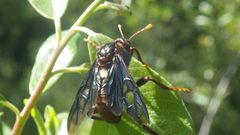
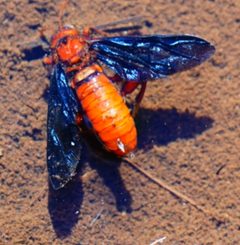
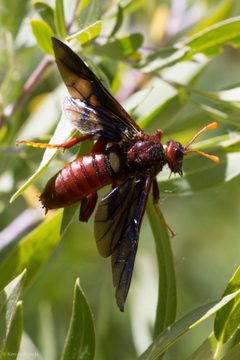
Cimbex rubidus, commonly known as the Rusty Willow , is a large sawfly in the Cimbicidae. are robust, -like insects with clubbed characteristic of the family. Larvae feed on willow foliage and have a caterpillar-like appearance with seven pairs of , distinguishing them from lepidopteran caterpillars which have five or fewer pairs. The is closely related to the Elm Sawfly (Cimbex americana) and shares many biological traits with other members of the .
Pronunciation
How to pronounce Cimbex rubidus: /ˈkɪmbɛks ˈruːbɪdəs/
These audio files are automatically generated. While they are not always 100% accurate, they are a good starting point.
Identification
Distinguished from similar by the combination of large size, clubbed , and association with willow. may be confused with Cimbex americana (Elm Sawfly), but C. rubidus shows association with willow rather than elm. Larvae distinguished from and caterpillars by having seven pairs of (true caterpillars have five or fewer). The rough, pebbly skin texture and black stripe help identify larvae. The coiled defensive posture when disturbed is characteristic of Cimbex larvae.
Images
Habitat
Associated with willow trees and other riparian vegetation. found in meadows, forest edges, and open woodlands near plants. Larvae occur on willow foliage.
Distribution
North America. Specific range details limited in available sources, but presumably overlapping with willow distribution in suitable .
Seasonality
Larvae observed primarily between June and October, though timing varies by location. active in spring and summer. One per year.
Diet
Larvae feed on willow (Salix) foliage. have been observed stripping bark from twigs to access sap, using their strong jaws.
Host Associations
- Salix - larval food plantPrimary ; 'Rusty Willow ' reflects this association
Life Cycle
Females insert into leaves using a saw-like ovipositor. Larvae feed on foliage, then crawl to ground to spin tough, papery cocoons in leaf litter or just below soil surface. Larvae overwinter in cocoons, pupating the following spring. (one per year).
Behavior
Larvae coil when disturbed and may release volatile chemicals from thoracic glands for defense. Also rest in coiled position. Males may defend territories. do not sting despite intimidating appearance.
Ecological Role
Herbivore as larvae, consuming willow foliage. Serves as for . Contributes to nutrient cycling through leaf consumption and larval-pupal development in soil.
Human Relevance
Rarely considered a pest. Occasionally causes noticeable defoliation of willows but typically not severe enough to warrant management. Of interest to entomologists and naturalists due to large size and distinctive appearance. Larvae sometimes collected for rearing and observation.
Similar Taxa
- Cimbex americanaVery similar in size, , and ; distinguished primarily by association (elm and other trees vs. willow for C. rubidus) and subtle differences in coloration and distribution
- Cimbex femoratusEuropean with similar ; distinguished by geographic range
More Details
Taxonomic note
The relationship between Cimbex rubidus and C. americana requires clarification; some sources suggest they may be or closely related sister with overlapping characteristics.