
Deinodryinus atriventris
(Cresson, 1872)
Deinodryinus atriventris is a of dryinid first described by Cresson in 1872. Members of the Deinodryinus are ectoparasitoids of Hemiptera, particularly leafhoppers and planthoppers (Cicadellidae and Fulgoroidea). The species is part of the Dryinidae, a group characterized by females that possess forelegs adapted for capturing insects. Observations of this species are sparse, with limited published biological data available.
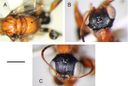
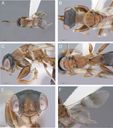
Pronunciation
How to pronounce Deinodryinus atriventris: //ˌdaɪnoʊˈdraɪɪnəs ˌætrɪˈvɛntrɪs//
These audio files are automatically generated. While they are not always 100% accurate, they are a good starting point.
Identification
Identification of D. atriventris requires examination of morphological features typical of the Deinodryinus, including the structure of the chela ( foreleg), antennal segmentation, and genitalia. The specific epithet "atriventris" (black-bellied) suggests dark coloration of the . Definitive identification relies on comparison with type material and reference to original description by Cresson (1872).
Images
Distribution
The has been recorded in North America based on original description and museum holdings. Specific locality data from the type description and subsequent collections would be required to establish precise range.
Host Associations
- Cicadellidae - -level association inferred from ; specific host records for D. atriventris not documented
- Fulgoroidea - -level association inferred from ; specific host records for D. atriventris not documented
Behavior
Females of Deinodryinus use their forelegs to capture mobile hemipteran . The paralyzes the host and typically oviposits externally, with the larva completing development as an ectoparasitoid. Whether D. atriventris exhibits this specifically has not been directly documented.
Ecological Role
As a member of Dryinidae, D. atriventris likely functions as a agent of leafhopper and planthopper . Dryinid are considered beneficial insects in agricultural systems due to their of pest hemipterans.
Human Relevance
No direct human relevance has been documented for this . The Dryinidae has potential value in programs targeting agricultural pests such as leafhoppers.
Similar Taxa
- Deinodryinus spp.Other in the share forelegs and general body plan; differentiation requires detailed morphological examination including chela structure and male genitalia
- Gonatopus spp.Related dryinid with similar and female forelegs; distinguished by antennal structure and chela
More Details
Taxonomic Note
The combination Deinodryinus atriventris (Cresson, 1872) indicates this was originally described in a different and later transferred to Deinodryinus. The original combination and subsequent transfer history would require examination of taxonomic literature.
Data Deficiency
This is poorly represented in biological literature. The 17 iNaturalist observations suggest some contemporary detection, but published biological studies are lacking. Most information is inferred from -level characteristics.