
Deinodryinus
Perkins, 1907
Species Guides
2Deinodryinus is a of dryinid established by Perkins in 1907. The genus contains at least five described distributed across multiple continents, including Madagascar, Brazil, and Mexico. Members are wasps, though specific associations remain largely undocumented. The genus exhibits an almost distribution pattern.
Pronunciation
How to pronounce Deinodryinus: //ˌdaɪnoʊˈdraɪɪnəs//
These audio files are automatically generated. While they are not always 100% accurate, they are a good starting point.
Identification
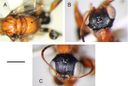
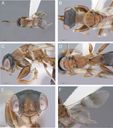
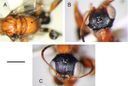
Deinodryinus can be distinguished from other Dryinidae by chelae ( forelegs) with a reduced number of teeth on the claw, typically 2-3 teeth rather than the 4-5 teeth found in related genera such as Anteon and Lonchodryinus. The pronotum is generally shorter and more compact than in Aphelopus. Species-level identification requires examination of male genitalia and female chela structure.
Images
Distribution
Almost . Documented from Madagascar (D. ambrensis), Brazil (D. brasiliensis), Mexico (D. mexicanus), and fossil records from the Aptian of France (D. aptianus). The has been recorded from the Neotropical, Afrotropical, and Palearctic regions.
Life Cycle
As with other Dryinidae, Deinodryinus has a . Females possess forelegs used to capture insects, which are typically nymphs of Auchenorrhyncha (leafhoppers and planthoppers). are laid in the host, and larvae develop internally before emerging to pupate externally in a characteristic cocoon. Specific host records for Deinodryinus are not well documented.
Behavior
Females use their forelegs (chelae) to grasp and immobilize insects prior to oviposition. This predatory is characteristic of the Dryinidae but specific behavioral observations for Deinodryinus are limited.
Ecological Role
of Auchenorrhyncha, contributing to of leafhopper and planthopper nymphs. May serve as biocontrol agents in agricultural systems, though this application has not been specifically documented for this .
Similar Taxa
- AnteonSimilar body plan and forelegs, but Anteon have 4-5 teeth on the chela claw versus 2-3 in Deinodryinus.
- LonchodryinusShares reduced chela , but Lonchodryinus has a more elongate pronotum and distinct propodeal carination.
- AphelopusOverlapping distribution and associations; Aphelopus have a more prominent pronotum and fully winged females in most species.
More Details
Fossil record
Deinodryinus aptianus is known from Lower Cretaceous (Aptian) amber from France, representing one of the oldest definitive records of the Dryinidae and providing evidence for the ancient origin of this .
Taxonomic history
The was established by George Wilson Perkins in 1907. Recent revisions by Olmi and colleagues (2010, 2019, 2021) have added multiple new , particularly from Madagascar and the Neotropics.