
Aphelopus
Dalman, 1823
Species Guides
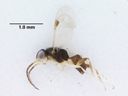
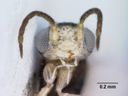
2Aphelopus is a of dryinid described by Dalman in 1823. are of leafhoppers (Cicadellidae), particularly typhlocybine leafhoppers, and are considered important natural enemies with potential for in agricultural systems. The genus is relatively diverse, with 39 species recorded from China alone and a distribution. Identification relies on wing venation characteristics and including clypeal structures.
Pronunciation
How to pronounce Aphelopus: /æˈfiːloʊpəs/
These audio files are automatically generated. While they are not always 100% accurate, they are a good starting point.
Identification
Recognizable by having only one costal surrounded by pigmented in the forewing. British can be distinguished by characters of the and associated structures. Species-level identification requires examination of and may involve both sexes.
Images
Habitat
Found in agricultural settings including grape vineyards, where they parasitize leafhopper . Specific natural preferences are not well documented.
Distribution
distribution. Recorded from China (39 ), with presence also documented in Denmark, Norway, and Sweden. Species occur in the Oriental and Eastern Palaearctic regions.
Host Associations
- leafhoppers - primary of typhlocybine leafhoppers (: Cicadellidae)
Life Cycle
Has been observed as a primary of leafhoppers. Specific developmental stages and details are not fully documented in available sources.
Behavior
of leafhopper . Abundance and parasitism rates have been studied in relation to leafhopper in grape vineyards.
Ecological Role
Important natural enemies of leafhoppers. Serve as agents of leafhopper pests in agricultural systems, particularly in grape production.
Human Relevance
Studied for potential use in programs targeting leafhopper pests in agriculture. research has been conducted to support identification for biocontrol applications.
Similar Taxa
- other Dryinidae generaAphelopus is distinguished from other dryinid by the single costal surrounded by pigmented ; other genera typically have different wing venation patterns
More Details
Taxonomic diversity
The is relatively diverse in China, with 39 recorded . Four new species were described in 2022 from China: A. incognitus, A. maculiala, A. taianensis, and A. zaifui.
Research methods
Recent taxonomic studies employ integrative approaches combining (COI gene) with to delimit and support identification keys.
Sources and further reading
- BugGuide
- Wikipedia
- GBIF taxonomy match
- iNaturalist taxon
- NCBI Taxonomy
- DNA barcoding of Aphelopus Dalman (Hymenoptera, Dryinidae) from China, with descriptions of four new species
- Aphelopus albopictusAshmead (Hymenoptera: Dryinidae): Abundance, Parasitism, and Distribution in Relation to Leafhopper Hosts in Grapes
- Aphelopus albopictusAshmead (Hymenoptera: Dryinidae): Abundance, Parasitism, and Distribution in Relation to Leafhopper Hosts in Grapes
- Life history studies onAphelopusspecies (Hymenoptera, Dryinidae) andChalarusspecies (Diptera, Pipunculidae), primary parasites of typhlocybine leafhoppers (Homoptera, Cicadellidae)
- A new key for the identification of the British species of Aphelopus (Hym; Dryinidae)