
Holopyga ventralis
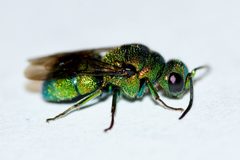
Holopyga ventralis is a of cuckoo wasp in the Chrysididae. The Holopyga comprises small, brilliantly metallic-colored that are of other wasps. Based on observations of related species in the genus, H. ventralis likely exhibits the distinctive parasitic of laying into aphids, which are then carried as prey by crabronid wasps into their nests where the Holopyga larva develops at the expense of the wasp's offspring.
Pronunciation
How to pronounce Holopyga ventralis: //hɒˈlɒpɪɡə vɛnˈtrɑːlɪs//
These audio files are automatically generated. While they are not always 100% accurate, they are a good starting point.
Images
Host Associations
- Aphids - laid into aphids which are then carried as prey by crabronid (e.g., Pemphredon) into nests; this indirect strategy has been documented for Holopyga
- Crabronidae - of crabronid nests; larva develops in nest consuming food provisions intended for host offspring
Behavior
Holopyga have been observed exhibiting a distinctive parasitic strategy: females lay directly into aphids. When crabronid (such as Pemphredon) collect these aphids as prey and carry them into their nests, the Holopyga larva emerges earlier than the wasp larva and develops as a , consuming the food provisions intended for the host offspring. This was first documented in 2012 for related Holopyga species and represents an indirect form of nest .
Ecological Role
of solitary ; may influence of wasp and their prey through this indirect parasitic relationship.
Similar Taxa
- OmalusSimilar small metallic cuckoo wasps that also parasitize aphids as an indirect route to crabronid nests; historically confused due to similar size and coloration
- PseudomalusRelated cleptoparasitic cuckoo wasps with similar and metallic coloration; some have been introduced to North America through global commerce
More Details
Behavioral documentation
The specific -laying into aphids for Holopyga was first brought to scientific attention through social media in 2016, when a Facebook post by Emily Hobson showing this behavior in a related generated discussion among chrysidid researchers. Christian Schmid-Egger noted that this behavior, while suspected, had not been formally described for Holopyga at that time. Subsequent publications by Veenendaal (2012) and Paukkunen et al. (2015) have documented this strategy for related .