
Holopyga
Dahlbom, 1845
cuckoo wasps
Species Guides
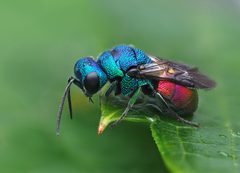
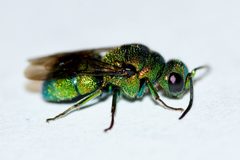
2Holopyga is a of cuckoo wasps in the Chrysididae. in this genus exhibit a distinctive cleptoparasitic : females oviposit into aphids, and when crabronid such as Pemphredon collect these aphids as prey for their nests, the Holopyga larva emerges first and consumes the food stores intended for the larva. This indirect of wasp nests via intermediates has been documented for Holopyga by Veenendaal (2012). The genus contains approximately 35 described species distributed across Europe and other regions.
Pronunciation
How to pronounce Holopyga: /həˈlɒpɪɡə/
These audio files are automatically generated. While they are not always 100% accurate, they are a good starting point.
Images
Distribution
Europe; recorded from Denmark (DK), Norway (NO), and Sweden (SE) in GBIF data. Some have been introduced to North America through global commerce.
Host Associations
- Aphidoidea - oviposition Females lay directly into aphids; these serve as for cleptoparasitism of crabronid nests
- Crabronidae - Specifically Pemphredon and related ; Holopyga larva develops in nest after host transports parasitized
Life Cycle
Females oviposit into living aphids. When crabronid capture these aphids and provision their nests with them, the Holopyga larva hatches and consumes the food stores intended for the larva, starving it to death. This represents an indirect, two-step requiring both an and a wasp host.
Behavior
Females have been observed interacting with aphids in a manner superficially resembling honeydew feeding, but this represents oviposition rather than feeding. The exhibits cleptoparasitic behavior, with larvae stealing food resources from nests.
Ecological Role
of crabronid ; of -hunting wasps. The indirect strategy may influence aphid through effects on aphid-hunting wasp survival.
Human Relevance
Some have been introduced to North America through accidental transport on global commerce. The has contributed to scientific understanding of complex parasitic strategies in Hymenoptera.
Similar Taxa
- OmalusShares the same indirect cleptoparasitic strategy of ovipositing into aphids to exploit crabronid nests; formally described for Omalus by Winterhagen (2015)
- PseudomalusSimilar cleptoparasitic involving intermediates; suspected to occur in all Pseudomalus based on observations and postulations by Veenendaal and others
Misconceptions
Many researchers historically assumed that cuckoo wasps in this infected nests directly. The indirect strategy—ovipositing into aphids that are subsequently collected by host —was not formally recognized until recent observational and photographic documentation.
More Details
Behavioral documentation
The cleptoparasitic of Holopyga was formally described by Veenendaal (2012). Photographic documentation of related behavior in Omalus violaceus on Facebook in 2016 prompted scientific discussion and citation of these prior formal descriptions.
Taxonomic note
The contains approximately 35 described , with most described by Linsenmaier across multiple publications from 1959–1999, and earlier species described by Dahlbom, Lucas, Fabricius, and others in the 19th century.