
Chrysis angolensis
Radoszkowski, 1881
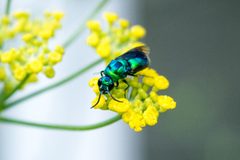
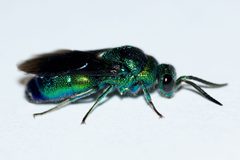
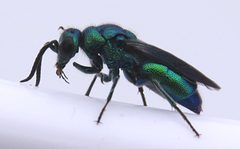
Chrysis angolensis is a cuckoo wasp in the Chrysididae. Originally described from Angola, it has established across much of the world through human-mediated . The is a documented of mud dauber nests, with a known association to the black and yellow mud dauber Sceliphron caementarium. It has been recorded as introduced to French Polynesia and is well-established in North America.
Pronunciation
How to pronounce Chrysis angolensis: //ˈkrɪsɪs ˌæŋɡəˈlɛnsɪs//
These audio files are automatically generated. While they are not always 100% accurate, they are a good starting point.
Identification
As a member of Chrysididae, this likely exhibits the 's characteristic metallic coloration, though specific diagnostic features for Chrysis angolensis are not detailed in available sources. Cuckoo wasps in this typically have a compact, heavily sculptured body with a dense that allows them to roll into a defensive ball when threatened by . Species-level identification within Chrysis requires examination of microscopic features not covered in the provided sources.
Images
Habitat
Associated with the nests of mud dauber , particularly in sheltered situations such as beneath overhangs, in cavities, or on human structures where construct mud . The has been observed in both natural and anthropogenic environments.
Distribution
Originally African; now through introduction. Documented from North America (including the conterminous 48 United States), Hawaii, French Polynesia, and other regions. The has been transported via international commerce, with females building nests inside shipping containers.
Diet
are known to feed on nectar. Larvae are parasitic, consuming the paralyzed spiders provisioned by mud daubers for their own offspring.
Host Associations
- Sceliphron caementarium - Primary ; black and yellow mud dauber
Life Cycle
Females infiltrate active mud dauber nests and lay inside . The larva consumes the prey items (paralyzed spiders) intended for the host offspring. Developmental details specific to this are not documented in available sources.
Behavior
Females wait near nests and enter when the host departs to hunt. When detected by hosts, individuals roll into a tight ball; the dense, pitted is impervious to host bites and stings. This defensive is characteristic of the Chrysididae.
Ecological Role
of solitary ; specifically a that usurps the prey provisions of mud daubers. This places the within nest parasite that regulate of wasps.
Human Relevance
Considered a nuisance by some homeowners due to association with mud dauber nests on buildings. Its spread via shipping containers illustrates human-mediated invasion dynamics. No documented economic benefit or harm beyond its role in natural .
Similar Taxa
- Native North American ChrysididaeOther cuckoo wasp also parasitize mud daubers; Chrysis angolensis is distinguished by its African origin and documented spread through human commerce
More Details
Invasion History
Chrysis angolensis represents a well-documented case of a parasitic wasp establishing globally through unintentional human transport. The was first described from Angola in 1881 and has since been recorded across multiple continents, with its spread linked to the global distribution of its Sceliphron caementarium.
Sources and further reading
- BugGuide
- Wikipedia
- GBIF taxonomy match
- iNaturalist taxon
- NCBI Taxonomy
- Bug Eric: Wasp Wednesday: Black & Yellow Mud Dauber
- Bug Eric: August 2011
- Tiger beetles in Argentina’s Chaco forest | Beetles In The Bush
- Bug Eric: Wasp vs. Wasp
- Bug Eric: The Wasp Wall
- Bees vs wasps: what's the difference? - Buglife Blog - Buglife