
Scleroderminae
Genus Guides
2- Cephalonomia
- Sclerodermus(Flat wasp)
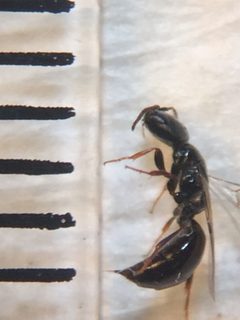
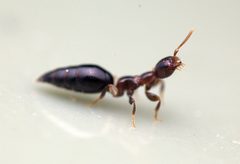
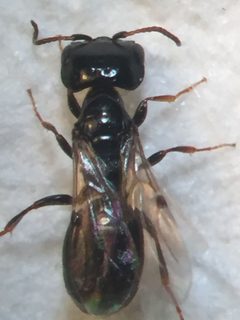
Scleroderminae is a of small within the Bethylidae. Members of this subfamily are characterized by their compact body form and reduced wing venation compared to other bethylids. They are primarily known as parasitoids of larvae, particularly those in wood-boring and stem-boring families. The subfamily includes such as Sclerodermus, which has been studied for its potential in .
Pronunciation
How to pronounce Scleroderminae: //ˌsklɛroʊˈdɜːrmɪniː//
These audio files are automatically generated. While they are not always 100% accurate, they are a good starting point.
Identification
Distinguished from other Bethylidae by the combination of: pronotum reaching tegulae, widely separated hind , reduced wing venation with few closed , and compact body form. Scleroderminae lack the elongated petiole seen in Epyrinae and the more developed wing venation of Bethylinae. Antennal segment count and mandibular structure also useful for distinguishing within the subfamily.
Images
Habitat
Found in where larvae occur, including dead wood, stems, and other plant materials. Associated with forests, woodlands, and areas with abundant woody debris or herbaceous stems. Often collected from decaying wood, under bark, or from rearing material containing wood-boring beetles.
Distribution
Widespread but poorly documented; recorded from multiple continents including North America, South America, Europe, Asia, and Africa. Distribution likely follows that of their beetles, but precise range boundaries are not well established due to limited collecting effort and taxonomic study.
Seasonality
activity patterns poorly documented; likely active during warmer months when larvae are available. Some may have multiple per year depending on climate and host availability.
Diet
of larvae (Coleoptera), particularly wood-borers and stem-borers in such as Cerambycidae, Curculionidae, and Buprestidae. do not feed; larvae consume tissues.
Host Associations
- Coleoptera - Primarily wood-boring and stem-boring larvae
Life Cycle
Females locate larvae in concealed such as wood or stems. They sting and paralyze the host, then lay on or near it. Larvae feed externally on the paralyzed host, consuming tissues until . Development is typically rapid, with multiple possible annually in favorable climates. Some exhibit gregarious development with multiple larvae per host.
Behavior
Females actively search for larvae in concealed substrates, using to detect host vibrations or chemical cues. Host location involves probing wood or plant stems with the ovipositor. Some display maternal care, with females remaining near developing offspring. Males are often short-lived and may be wingless or have reduced wings in some species.
Ecological Role
agents of wood-boring and stem-boring beetles. Help regulate of potentially destructive beetles in natural and managed . May serve as food for larger or .
Human Relevance
Some , particularly in the Sclerodermus, have been investigated for of pest beetles including emerald ash borer and other wood-borers. Potential value in forestry and urban tree protection, though practical application remains limited.
Similar Taxa
- BethylinaeAnother of Bethylidae; distinguished by more developed wing venation with additional closed and generally more slender body form.
- EpyrinaeBethylid with elongated petiole and different antennal structure; also tends to have more distinct body segmentation.
- SclerogibbidaeFormerly included in Bethylidae as Sclerogibbinae; now separate ; distinguished by different wing structure and associations (embid ).
More Details
Taxonomic History
The classification of bethylid has been unstable. Scleroderminae has sometimes been treated as a tribe within a broader concept of Bethylinae. Recent molecular and morphological studies support its recognition as a distinct subfamily. The Sclerodermus is the best-known and most economically significant genus in the subfamily.
Research Needs
Basic remains unknown for most . records are scattered and often based on limited observations. Taxonomic revision of many is needed, particularly in tropical regions where diversity is likely high but undocumented.