
Jaliscoa
Bouček, 1993
Species Guides
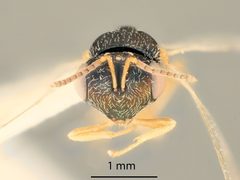
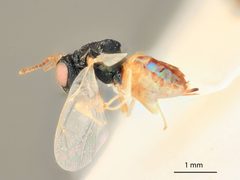
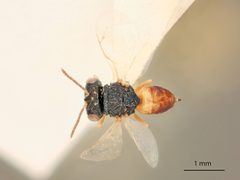
1Jaliscoa is a of chalcidoid wasps in the Pteromalidae, established by Bouček in 1993. The genus was redefined in a 2013 taxonomic revision and currently includes four : J. nudipennis (type species), J. bouceki, J. hunteri, and J. vulgaris. The most extensively studied species, J. hunteri, is a of weevils in the genus Anthonomus, particularly the pepper weevil (A. eugenii), and has been investigated as a agent. Unlike many parasitoids, J. hunteri exhibits significant feeding that contributes to pest suppression.
Pronunciation
How to pronounce Jaliscoa: //jaˈlis.ko.a//
These audio files are automatically generated. While they are not always 100% accurate, they are a good starting point.
Identification
Jaliscoa is distinguished from related pteromalid (Catolaccus, Eurydinoteloides, Lyrcus, Trimeromicrus) by morphological features detailed in the 2013 revision, including specific arrangements of , mesosoma, and metasoma characteristics. The genus can be differentiated from Catolaccus by features of the propodeum and petiole structure. Macrophotography and scanning electron photomicrography of primary are available for -level identification. J. hunteri specifically has been noted as previously classified under Catolaccus and Pteromalus before transfer to Jaliscoa.
Images
Habitat
Associated with agricultural and horticultural systems where weevils occur, including pepper crops (Capsicum annuum) and tropical hibiscus (Hibiscus rosa-sinensis). Field collection sites include areas with pepper weevil ; specific natural preferences beyond host-associated locations are not documented.
Distribution
New World distribution; transferred to Jaliscoa originate from Nearctic and Neotropical regions previously assigned to Catolaccus and Pteromalus. Specific geographic range data for individual species other than collection-locality information for J. hunteri is limited.
Host Associations
- Anthonomus eugenii - primary pepper weevil; natural for J. hunteri
- Callosobruchus maculatus - factitious used for laboratory rearing of J. hunteri but less preferred than natural
- Anthonomus testaceosquamosus - hibiscus bud weevil; feeding observed but rare
Behavior
J. hunteri exhibits discrimination capacity, preferring natural hosts over factitious hosts regardless of whether females are wild-caught or laboratory-reared. The engages in substantial host feeding on stages of hosts (, larvae, pupae), functioning more as a than a strict in some contexts. Females are attracted to volatiles emitted by pepper weevil-infested plants and fruit. Host feeding mortality can reach high levels: up to 62% suppression of weevil offspring in controlled conditions, with greater efficacy on L3 larvae than L1 larvae and on small versus large fruit.
Ecological Role
agent of weevil pests in agricultural systems. Functions primarily through feeding rather than in some host associations, contributing to pest suppression in pepper and hibiscus crops. Potential value in commercial greenhouse production where retention rates can be high.
Human Relevance
Investigated as a biocontrol agent for the pepper weevil (Anthonomus eugenii), a major pest of field and greenhouse pepper crops in North America. Mass rearing on factitious (Callosobruchus maculatus) has been explored to reduce production costs, though effectiveness may be compromised compared to natural host rearing. Also evaluated for control of the hibiscus bud weevil (Anthonomus testaceosquamosus) in tropical hibiscus nurseries.
Similar Taxa
- CatolaccusPreviously included now transferred to Jaliscoa; distinguished by propodeal and petiolar
- PteromalusSource of transferred J. vulgaris and J. townsendi; J. hunteri was previously classified here
- EurydinoteloidesRelated pteromaline with which Jaliscoa shares tribal membership but differs in morphological features of and body structure
- LyrcusRelated redefined in same 2013 revision; differs in distribution of morphological features across New World and Australasian
Sources and further reading
- BugGuide
- Wikipedia
- iNaturalist taxon
- NCBI Taxonomy
- Catalogue of Life
- Revision of the species of Jaliscoa Bouček within a review of the identity, relationships and membership of Jaliscoa, Catolaccus Thomson, Eurydinoteloides Girault, Lyrcus Walker and Trimeromicrus Gahan (Hymenoptera: Pteromalidae)
- Host Feeding by Jaliscoa hunteri1 on Immature Stages of Pepper Weevil2
- Discriminación del parasitoide Jaliscoa hunteri (Hymenoptera: Pteromalidae) sobre un huésped natural y uno facticio
- Host Feeding by Jaliscoa hunteri Crawford (Hymenoptera: Pteromalidae) Suppresses Populations of Anthonomus testaceosquamosus Linell (Coleoptera: Curculionidae)
- Volatiles emitted by pepper weevil-infested plants and fruit strongly attract the pteromalid parasitoid Jaliscoa hunteri
- How plant and insect host characteristics affect pepper weevil Anthonomus eugenii parasitism efficacy by the pteromalid Jaliscoa hunteri