
Ormyrus
Westwood, 1832
Species Guides
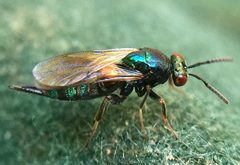
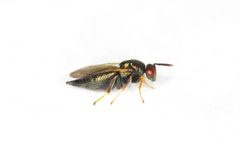
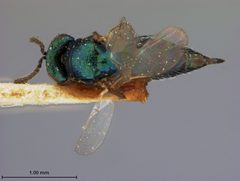
3Ormyrus is a of small chalcid wasps in the Ormyridae, containing approximately 145 described . These are primarily associated with gall-forming insects, including cynipid gall wasps, chalcid wasps, gall midges, and tephritid fruit flies. The genus exhibits significant cryptic diversity, as demonstrated by the case of Ormyrus labotus, long considered a single species attacking over 65 species, but now recognized as a complex of at least 16–18 genetically distinct, morphologically identical species. Ormyrus species are found across the Old World and North America.
Pronunciation
How to pronounce Ormyrus: //ˈɔːrmɪrəs//
These audio files are automatically generated. While they are not always 100% accurate, they are a good starting point.
Identification
Ormyrus can be distinguished from other chalcid by the combination of: greatly enlarged, subtriangular metacoxa; two stout curved spurs on the metatibia; tarsal claws with large basal lamellar projections; strongly sclerotized metasoma with transverse rows of large pits on tergites; bilobed clypeal margin; and well-developed occipital carina. The closed postgenal bridge and absence of a postgenal lamina are additional diagnostic features. -level identification traditionally relied on , but genetic analysis has revealed extensive cryptic diversity, making molecular methods increasingly necessary for accurate species determination.
Images
Habitat
Ormyrus are found in where their gall-forming occur. This includes oak forests and woodlands (for species attacking cynipid gall wasps), areas with Silphium species (rosinweeds) in North America, and regions with Ficus microcarpa in the Mediterranean where the introduced fig hosts associated fig wasps. The is primarily associated with plant galls on diverse host plants and tissues.
Distribution
Old World (Europe, Asia, Africa) and North America. Specific records include: Iran (eleven ), Greece and Cyprus (Ormyrus microcarpae), Cameroon (Ormyrus nkoloensis), North America (multiple species including those associated with Silphium). The has a broad geographic range corresponding to the distribution of their gall-forming .
Host Associations
- Cynipidae (gall wasps) - primary especially cynipid gall wasps inducing galls on oaks and other plants
- Chalcidoidea (chalcid wasps) - other chalcid wasps that are gall formers
- Cecidomyiidae (gall midges) - gall-forming
- Tephritidae (fruit flies) - tephritid fruit flies
- Antistrophus meganae - cynipid on Silphium terebinthinaceum; of Ormyrus bellbowl
- Antistrophus laciniatus - cynipid on Silphium laciniatum and S. terebinthinaceum; of Ormyrus myrae
- Meselatus bicolor - probable Epichrysomallidae ; likely of Ormyrus microcarpae in Ficus microcarpa figs
- Gallastichus mutuus - associatedeulophid gall inducer on Bikinia letestui; Ormyrus nkoloensis possibly or
Life Cycle
Development occurs within the galls of insects. emerge from galls. Specific details of -laying, larval development, and vary by and host association.
Behavior
Females lay in or on gall-forming insects inside plant galls. The exhibits specialization at the level, contrary to earlier assumptions of generalism. Ormyrus labotus was long considered exceptional for attacking over 65 host species, but this morphospecies actually comprises 16–18 cryptic species each restricted to 1–6 host gall types. Some species may function as rather than in certain associations.
Ecological Role
(and possibly ) of gall-forming insects. As parasitoids, they regulate of gall-forming insects and contribute to the complex associated with plant galls. The high degree of cryptic specialization suggests fine-tuned ecological relationships with specific .
Human Relevance
Potential importance for of gall-forming pests, including . The discovery of cryptic highlights the necessity of accurate identification for effective biocontrol implementation. Misidentification of versus could lead to ineffective or unintended biological control outcomes.
Similar Taxa
- Other Ormyridae generashare -level characteristics; distinguished by generic-level morphological features particularly of the metacoxa, metatibia, and metasomal sculpturing
- Other chalcid parasitoids of gall formers (e.g., Eurytomidae, Pteromalidae, Eulophidae)share as gall-associated ; distinguished by Ormyrus-specific morphological characters and genetic differentiation
Misconceptions
The long-standing treatment of Ormyrus labotus as a attacking over 65 has been overturned; this morphospecies actually represents a complex of 16–18 cryptic species. This case illustrates broader risks of assuming generalism based solely on morphological similarity in parasitoid .
More Details
Cryptic species diversity
Ormyrus labotus exemplifies extreme cryptic diversity: a single morphological described in 1843 was found to contain at least 16 genetically distinct, reproductively isolated species with narrower ranges (1–6 host gall types each). This discovery was made through combined molecular, morphological, ecological, and phenological analysis. Similar cryptic have been found in at least two other named Ormyrus species.
Taxonomic status
The Ormyrus labotus complex currently remains undescribed at the level; the 16–18 putative species await formal taxonomic description and naming. Specimens from the revealing study have been preserved and are available for taxonomic revision.
Fig association novelty
Ormyrus microcarpae represents the first recorded association of Ormyrus with figs in Europe, developing in figs of the introduced Ficus microcarpa and likely parasitizing the Meselatus bicolor.
Sources and further reading
- BugGuide
- Wikipedia
- GBIF taxonomy match
- iNaturalist taxon
- NCBI Taxonomy
- Catalogue of Life
- Cryptic species of Ormyrus labotus - Entomology Today
- Hidden Diversity: When One Wasp Species is Actually 16
- Ormyrus labotus Archives - Entomology Today
- The Best of 2022 on Entomology Today
- Two new species of Ormyrus Westwood (Hymenoptera: Ormyridae) from Cynipidae (Hymenoptera) galls on Silphium L. (Asteraceae: Heliantheae)
- The species of Ormyrus Westwood (Hymenoptera: Ormyridae) in Iran with description of an unusual new species
- A new species of Ormyrus Westwood (Hymenoptera, Ormyridae) developing in figs of Ficus microcarpa in Europe
- Ormyrus labotus Walker (Hymenoptera: Ormyridae): another generalist that should not be a generalist is not a generalist
- Ormyrus labotus (Hymenoptera: Ormyridae): Another Generalist That Should not be a Generalist is not a Generalist
- A new Afrotropical genus and species of Tetrastichinae (Hymenoptera: Eulophidae) inducing galls on Bikinia (Fabaceae: Caesalpinioideae) and a new species of Ormyrus (Hymenoptera: Ormyridae) associated with the gall