
Brasema rhadinosa
Gibson, 1995
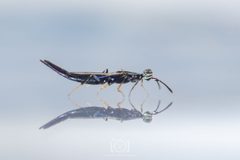
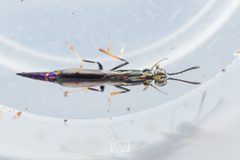
Brasema rhadinosa is a of chalcidoid in the Eupelmidae, described by Gibson in 1995. It belongs to a of wasps associated with insect . The species has been recorded from multiple states in the southeastern and eastern United States.
Pronunciation
How to pronounce Brasema rhadinosa: /brəˈsiːmə rəˈdɪnoʊsə/
These audio files are automatically generated. While they are not always 100% accurate, they are a good starting point.
Identification
Brasema rhadinosa can be distinguished from other Brasema by features established in the original description by Gibson (1995), including specific morphological characteristics of the and wing venation. Accurate identification requires examination of microscopic characters and comparison with type material.
Images
Distribution
United States: Alabama, Arkansas, California, Delaware, Florida. The disjunct distribution including California suggests either broader range than currently documented or potential misidentifications requiring verification.
Ecological Role
As a member of Eupelmidae, likely functions as a of insect or stages, though specific relationships for this have not been documented.
Similar Taxa
- Brasema sp. (other species)Congeneric share general body plan and require detailed morphological examination for separation; B. rhadinosa is distinguished by specific antennal and wing characters described by Gibson (1995).
- Other Eupelmidae generaMembers of Eupelmidae share -level characteristics including reduced wing venation and mesosoma structure; generic assignment requires examination of tarsal structure and other diagnostic features.
More Details
Taxonomic history
Described by Gary A.P. Gibson in 1995 as part of a revisionary study of the Brasema. The specific epithet 'rhadinosa' derives from Greek, referring to slender or tapering features.
Research needs
associations, complete distribution, and biological data remain undocumented for this . Field studies targeting potential hosts in recorded distribution states would advance understanding of its .