
Aceratoneuromyia
Girault, 1917
Aceratoneuromyia is a of small in the Eulophidae, Tetrastichinae. are primarily gregarious koinobiont endoparasitoids of Diptera, especially fruit flies (Tephritidae). The genus includes economically important agents, notably A. indica, which has been used worldwide in field release programs against fruit fly pests. Recent taxonomic work has synonymized Trjapitzinichus under this genus and described three new species from China.
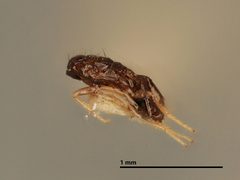
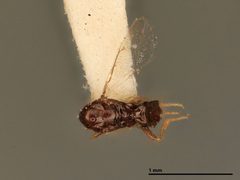
Identification
Members of Aceratoneuromyia can be distinguished from related by morphological characters detailed in the world key provided by Huangfu et al. (2022). The genus was historically considered close to Melittobia based on , but courtship studies suggest this relationship is unlikely. barcodes are available for some species (A. bilinis, A. indica) to aid identification. Three new species from China (A. bilinis, A. carinata, A. trilinus) are characterized by specific morphological features described and illustrated in the taxonomic revision.
Images
Distribution
Mainly Old World distribution, with most described from the Palearctic (Europe) and Oriental regions (India, Japan). Aceratoneuromyia indica has been widely distributed worldwide through intentional introduction as a agent. A. fimbriata has been recorded from the New World. Three new species (A. bilinis, A. carinata, A. trilinus) described from China.
Host Associations
- Bactrocera dorsalis - Tephritidae; rearing record for A. indica
- Pelmatops ichneumoneus - Tephritidae; rearing record for A. bilinis
- Tephritidae - fruit flies; primary for most
- Anthomyiidae - Diptera; from literature review
- Cleigastra apicalis - Sarcophagidae; hyperparasitoid for A. granularis via of Phragmites australis
Life Cycle
Gregarious koinobiont endoparasitoid development. emerge from pupae. develop internally within dipteran hosts, with multiple individuals typically emerging from a single host.
Behavior
Courtship in A. granulans is rigidly organized with alternating low- and high-phases, which has been used as a taxonomic character to distinguish the from relatives such as Melittobia. The low-phase appears to represent copulatory motivation.
Ecological Role
agent of economically important fruit fly pests (Tephritidae) in agricultural systems. Reduces damage and economic losses to fruit crops through of pest .
Human Relevance
Aceratoneuromyia indica has been used in programs worldwide to manage fruit fly pests. Taxonomic difficulties in identification have impeded optimal use of these in biocontrol. The provides important services in agriculture through natural and applied biological control.
Similar Taxa
- MelittobiaHistorically considered close relatives based on , but courtship evidence indicates this relationship is unlikely; Aceratoneuromyia shows rigidly organized courtship with phase alternation not characteristic of Melittobia
- TrjapitzinichusProposed as new synonym under Aceratoneuromyia based on morphological study; previously recognized as separate
More Details
Taxonomic revision
Huangfu et al. (2022) provided a comprehensive revision including world key, barcodes for A. bilinis and A. indica, and description of three new Chinese species
Behavioral taxonomy
Courtship has proven useful for resolving taxonomic placement within Eulophidae, particularly for distinguishing Aceratoneuromyia from morphologically similar