
Omphale
Haliday, 1833
Species Guides
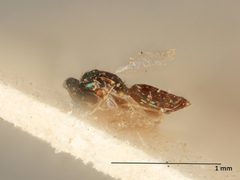
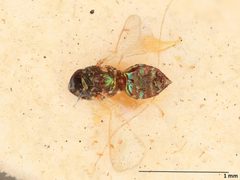
1Omphale is a of minute in the Eulophidae, first described by Alexander Henry Haliday in 1833. These tiny chalcidoid wasps are part of the diverse Entedoninae , which contains numerous that parasitize other insects. The genus has a wide geographic distribution including Europe and Asia, with recent taxonomic work documenting multiple species from China. Like other eulophids, Omphale species are likely associated with vegetation where their occur, though specific host relationships remain poorly documented for most species.
Pronunciation
How to pronounce Omphale: /ˈɒmfəˌli/
These audio files are automatically generated. While they are not always 100% accurate, they are a good starting point.
Identification
Identification of Omphale requires examination of minute morphological characters visible only under high magnification. Key diagnostic features include details of the mesosoma, particularly the scutellum and propodeum structure, with specific numbers of funicular segments, and wing venation patterns. The is distinguished from related eulophid genera by combinations of characters including the arrangement of setae on the scutellum, the shape of the plicae on the propodeum, and the structure of the male genitalia. The 2024 revision of Chinese species provides the most recent comprehensive identification key, utilizing characters such as antennal segment proportions, notaulus development, and leg coloration.
Images
Habitat
Collection records indicate association with vegetated where sweep netting, yellow-pan trapping, and Malaise trapping are effective. Specific microhabitat preferences are unknown, but the trapping methods employed suggest presence in herbaceous vegetation, shrub layers, and ground-level environments. Chinese specimens have been collected from national nature reserves and mountain scenic areas including broadleaf forest and mixed vegetation zones.
Distribution
Documented from China (Guangdong, Shandong, Liaoning, Chongqing, Inner Mongolia), Hungary, United Kingdom, Russia, Sweden, Netherlands, Bulgaria, Romania, Ireland, France, Germany, Croatia, Serbia, Czech Republic, Denmark, Norway. The appears to have a Palearctic distribution with extensions into the Oriental region, though sampling may affect recorded range limits.
Ecological Role
As members of Eulophidae, Omphale function as , likely attacking or larvae of other insects. The is known for parasitizing Diptera, Lepidoptera, and Coleoptera, though specific records for Omphale are not documented in available sources. Their role in regulating of potential pest insects remains unquantified.
Similar Taxa
- EntedonBoth belong to Entedoninae and share general body plan of small, compact eulophid ; distinguished by scutellar setation and propodeal structure
- ChrysocharisSimilar size and metallic coloration common in the ; separated by antennal segmentation and wing venation details
- PnigalioOverlapping distribution and use; differentiated by mesoscutal structure and male genitalia
More Details
Taxonomic history
The was established by Irish entomologist Alexander Henry Haliday in 1833. Recent taxonomic work (2024) has significantly expanded known in China, describing four new and documenting four new country records, bringing the total known Chinese fauna to 19 species.
Research methods
Modern descriptions rely on scanning electron microscopy and detailed measurements of morphological ratios. The 2024 Chinese revision represents the most comprehensive regional treatment, utilizing both newly collected material and examination of from European collections.
Sources and further reading
- BugGuide
- Wikipedia
- GBIF taxonomy match
- iNaturalist taxon
- NCBI Taxonomy
- Catalogue of Life
- Destination Tambopata River, Peru: The search for salt by birds and birdwing moths, Urania sp. — Bug of the Week
- Four new species and four newly recorded species of Omphale Haliday (Hymenoptera, Eulophidae) from China, with a key to Chinese species.