
Cerchysiella
Girault, 1914
Species Guides
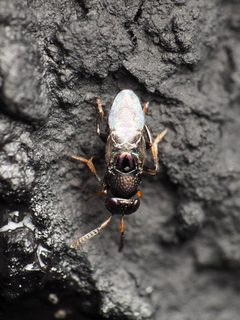
1Cerchysiella is a of in the Encyrtidae (Hymenoptera: Chalcidoidea). in this genus are gregarious koinobiont endoparasitoids that develop inside the larvae of various beetles, particularly wood-boring cerambycids and nitidulid pests of agricultural crops. The genus has been documented in Asia and the Americas, with some species showing potential as agents for forest and agricultural pests.
Pronunciation
How to pronounce Cerchysiella: /sɛrkʰiˈsiːəllə/
These audio files are automatically generated. While they are not always 100% accurate, they are a good starting point.
Images
Habitat
Forest areas with broad-leaved trees; agricultural crop systems including strawberry fields. Specific include wood of Quercus (Fagaceae) in northeastern China forests, and ripe fruit production areas where nitidulid occur.
Distribution
China (northeastern forest areas); Brazil (Paraná, São Paulo, Santa Catarina); Trinidad and Tobago; Denmark; Norway; Sweden. Distribution records span agricultural and forest across Asia and the Americas.
Host Associations
- Mesosa myops (Coleoptera: Cerambycidae) - gregarious koinobiont endoparasitoid of mature larvaewood-boring pest of broad-leaved trees in China
- Lobiopa insularis (Coleoptera: Nitidulidae) - gregarious endoparasitoid of larvaestrawberry sap beetle pest in Brazil
- Chestnut trunk borer (Coleoptera: Cerambycidae) - of larvaenew described from China
- Nitidulidae - gregarious endoparasitoid-level association
Life Cycle
Gregarious koinobiont endoparasitoid development. Multiple individuals (6-8 per ) develop inside host larvae. is indicated by nodosities formed on host tegument before .
Behavior
Forms visible nodosities on tegument prior to . Gregarious development results in multiple offspring emerging from a single host larva.
Ecological Role
Principal natural enemy of wood-boring cerambycid pests in forest . agent of agricultural pests, particularly the strawberry sap beetle Lobiopa insularis. Contributes to natural suppression of in both managed and natural systems.
Human Relevance
Potential agent for in strawberry production and forest pest management. Natural rates above 33% have been documented, indicating significant biocontrol potential.
Similar Taxa
- CerchysiusSimilar name and placement; distinguished by morphological characters in scutellum and wing venation
- Other Encyrtidae generaCerchysiella can be distinguished by combination of antennal structure, scutellar shape, and specific associations with larvae
More Details
Species diversity
The includes at least seven described : C. abilis (Silvestri), C. insularis (Howard), C. laevigata (De Santis), C. laeviscuta (Thomson), C. planiscutellum (Mercet), C. scutellata (Howard), C. utilis (Noyes), and C. mesosae Yang (described 2013).
Taxonomic history
established by Girault in 1914. have been described from various regions including the Americas and Asia. The UCR Encyrtidae collection holds multiple Cerchysiella species including C. planiscutellum.
Sources and further reading
- BugGuide
- GBIF taxonomy match
- iNaturalist taxon
- Catalogue of Life
- Encyrtid Holdings | Entomology Research Museum
- First record of Cerchysiella insularis (Howard, 1897) (Hymenoptera: Encyrtidae) parasitizing Lobiopa insularis (Castelnau, 1840) (Coleoptera: Nitidulidae) on strawberries
- Cerchysiella mesosae Yang sp. nov. (Hymenoptera: Encyrtidae), a parasitoid of Mesosa myops (Dalman) (Coleoptera: Cerambycidae) larvae in China
- A new species ofCerchysiella(Hymenoptera: Encyrtidae) parasitic in larva of chestnut trunk borer (Coleoptera: Cerambycidae) from China with notes on its biology