
Blastothrix
Mayr, 1876
Species Guides
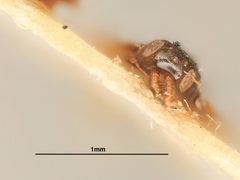
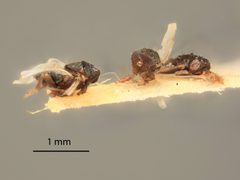
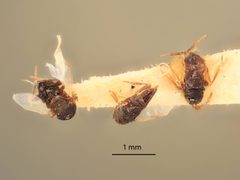
1Blastothrix is a of encyrtid in the Encyrtidae. The genus includes that function as of scale insects, with Blastothrix sericea being a notable example used in . This species was successfully introduced from England to British Columbia in 1928-1929 to manage the lecanium (Eulecanium coryli), achieving 90-100% rates and suppressing within four years.
Pronunciation
How to pronounce Blastothrix: //ˌblæs.toʊˈθrɪks//
These audio files are automatically generated. While they are not always 100% accurate, they are a good starting point.
Images
Distribution
Records from Virginia (USA), Yunnan (China), and Bulgaria (BG). Specific distribution varies by ; Blastothrix sericea is native to England and was introduced to British Columbia, Canada.
Host Associations
- Eulecanium coryli - of Blastothrix sericea; lecanium causing injury to broad-leaved maple, vine maple, and horse chestnut
Behavior
Blastothrix sericea exhibits rapid from release points, expanding from 20 to 100 square miles within one year of distribution. The demonstrates high , achieving 90-100% parasitism of mature females.
Ecological Role
agent of insect pests. Blastothrix sericea effectively suppressed lecanium scale in British Columbia, reducing to very low levels and diminishing the need for chemical control operations.
Human Relevance
Used in programs. Blastothrix sericea was imported to British Columbia in 1928-1929 to manage the introduced lecanium , representing a successful case of biological pest management.
Similar Taxa
- ParablastothrixSimilar within Encyrtidae; distinguished by specific morphological features of the and wing venation
- MetablastothrixRelated encyrtid ; Blastothrix differs in body proportions and antennal structure
More Details
Historical biological control success
The introduction of Blastothrix sericea to British Columbia represents one of the documented successes in . Following importation from England in 1928-1929, the was established in North Vancouver and distributed throughout the main area. By 1932, it had achieved rates sufficient to collapse the lecanium without continued chemical intervention.
Taxonomic context
The Blastothrix was established by Mayr in 1876. The UCR Encyrtidae collection holds multiple Blastothrix including B. americana, B. brittanica, B. erythrostetha, B. hedqvisti, B. hungarica, B. kermivora, B. longipennis, B. matesovae, B. ozukiensis, B. sericea, and additional undetermined specimens.