
Cleonymidae
Walker, 1837
Genus Guides
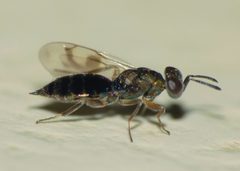
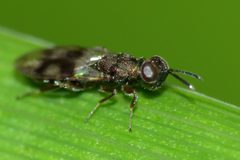
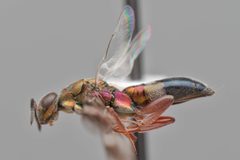
3Cleonymidae is a of parasitic in the superfamily Chalcidoidea, elevated from status within Pteromalidae based on morphological and phylogenetic studies. The family contains approximately 190 documented observations and includes seven recognized : Agrilocida, Callocleonymus, Cleonymus, Dasycleonymus, Notanisus, and Zolotarewskya. Members are small , though specific biological details for the family remain poorly documented in published literature.
Pronunciation
How to pronounce Cleonymidae: /kleɪˈɒnɪˌmaɪdiː/
These audio files are automatically generated. While they are not always 100% accurate, they are a good starting point.
Identification
Cleonymidae was distinguished from Pteromalidae through morphological developed for a revised classification of Chalcidoidea, though specific diagnostic characters are not detailed in available sources. As a recently elevated , identification keys are under development for inclusion in a forthcoming world fauna treatment.
Images
Similar Taxa
- PteromalidaeCleonymidae was formerly treated as a (Cleonyminae) within Pteromalidae; the two share historical taxonomic boundaries and morphological similarities that necessitated explicit reclassification.
More Details
Taxonomic History
Cleonymidae was elevated from to status as part of a broader revision of Pteromalidae that created ten new families, including Coelocybidae, Epichrysomallidae, Eunotidae, Heydeniidae, Megastigmidae, Neanastatidae, Pirenidae, Spalangiidae, and Systasidae. This reclassification aims to preserve the validity and diagnosability of well-established Chalcidoidea families while accommodating new molecular phylogenetic data.
Sources and further reading
- BugGuide
- Wikipedia
- GBIF taxonomy match
- iNaturalist taxon
- NCBI Taxonomy
- Catalogue of Life
- A systematic review of the Families Chrysolampidae, Cleonymidae, Diparidae, Cerocephalidae, Chalcedectidae, Ceidae and Herbertiidae
- Studies of the Families Cleonymidae, Coelocybidae, Epichrysomallidae, Eunotidae, Heydeniidae, Megastigmidae, Neanastatidae, Pirenidae, Spalangiidae and Systasidae (Hymenoptera: Chalcidoidea)