
Epichrysomallidae
Hill & Riek, 1967
Genus Guides
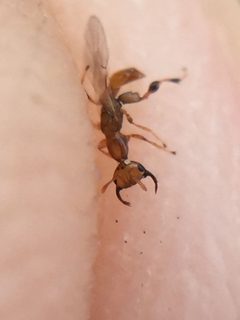
1Epichrysomallidae is a of minute gall-forming in the superfamily Chalcidoidea. Formerly classified as a of Pteromalidae, it was elevated to family rank based on molecular phylogenetic evidence showing closer relationships to other gall-forming chalcid wasps. Members are obligate associates of fig trees (Ficus), inducing galls in figs, on leaves, or on twigs. The family contains approximately 20 described distributed across tropical and subtropical regions.
Pronunciation
How to pronounce Epichrysomallidae: //ˌɛpɪˌkɹaɪzoʊˈmælɪdiː//
These audio files are automatically generated. While they are not always 100% accurate, they are a good starting point.
Identification
Distinguished from Pteromalidae and other chalcidoid by the combination of: with small fourth clavomere; flexible, concealed ; tridentate ; and fore wing venation with stigmal at right angle and postmarginal vein shorter than stigmal vein. The five-segmented (with exceptions noted above) separate most from related gall-forming chalcidoids. Identification to genus requires examination of tarsal segmentation, antennal structure, and mesosomal sculpturing.
Images
Appearance
Small chalcidoid wasps with typical reduced wing venation. bears 10–12 flagellomeres with a small fourth clavomere. is flexible and concealed behind the . tridentate (three-toothed). Notauli complete on mesoscutum. Legs typically with five tarsomeres, though Odontofroggatia and Josephiella have four-segmented . Fore wing with stigmal arising at right angle; postmarginal vein shorter than stigmal vein.
Habitat
Tropical and subtropical forests, woodlands, and urban areas where Ficus occur. Specifically associated with the microhabitats provided by fig trees: developing syconia (fig fruits), leaf lamina, and young twigs where gall induction occurs.
Distribution
Pantropical and subtropical distribution, with records from the Afrotropical region, Oriental region (including China, Xishuangbanna), and likely throughout the native and introduced ranges of Ficus . Specific documented locations include Australia (type locality context), China (Yunnan), and various Afrotropical localities.
Host Associations
- Ficus altissima - gall inducerEarly gall maker developing in figs; documented for Sycophilodes
- Ficus - gall inducerObligate association with fig trees; galls induced in figs, on leaves, or on twigs across multiple Ficus
Life Cycle
Early gall makers that develop within plant tissue galls. Specific details of deposition, larval development, and within galls are presumed but not explicitly documented in available sources. synchronized with Ficus .
Behavior
Gall induction is the primary documented . initiate gall formation in fig tissues, leaves, or twigs, with larvae developing protected within the plant-derived gall structure.
Ecological Role
Gall-forming herbivores that modify Ficus plant tissue for larval development. Their role in fig-plant interactions and potential contribution to fig structure (alongside pollinating and non-pollinating fig wasps) is implied by their but not quantitatively assessed.
Human Relevance
No direct economic importance documented. Indirect relevance through association with Ficus , which are economically and culturally significant as food crops, ornamental plants, and in tropical .
Similar Taxa
- PteromalidaeFormerly classified as Epichrysomallinae within Pteromalidae; distinguished by molecular and morphological characters including antennal structure and wing venation
- Agaonidae (fig wasps)Both associated with Ficus; Agaonidae are with distinct morphological adaptations (elongate ovipositor for accessing fig interior, often wingless males), while Epichrysomallidae are gall-formers with different and
- Other gall-forming ChalcidoideaEpichrysomallidae are now placed as closer relatives to other gall-forming chalcid wasps than to pteromalids; specific distinguishing characters include tarsal segmentation and antennal clavomere structure
More Details
Taxonomic history
Elevated from Epichrysomallinae of Pteromalidae to rank as part of a major revision of Chalcidoidea classification. This revision aimed to produce monophyletic, diagnosable families in preparation for a comprehensive molecular .
Fig wasp community context
Epichrysomallidae represent one of multiple chalcidoid associated with Ficus, forming part of the complex of pollinating and non-pollinating fig wasps. Their specific ecological interactions within this community remain understudied relative to pollinating agaonids.
Sources and further reading
- BugGuide
- Wikipedia
- GBIF taxonomy match
- iNaturalist taxon
- NCBI Taxonomy
- Catalogue of Life
- Studies of the Families Cleonymidae, Coelocybidae, Epichrysomallidae, Eunotidae, Heydeniidae, Megastigmidae, Neanastatidae, Pirenidae, Spalangiidae and Systasidae (Hymenoptera: Chalcidoidea)
- Description of two new species of Sycophilodes (Hymenoptera: Chalcidoidea: Epichrysomallidae) from China with a key to species of the genus
- New genera of Afrotropical Chalcidoidea (Hymenoptera: Cerocephalidae, Epichrysomallidae, Pirenidae and Pteromalidae).