
Phylloecus trimaculatus
(Say, 1824)
Rose Shoot Sawfly
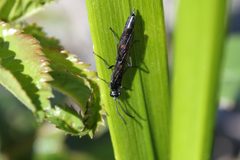
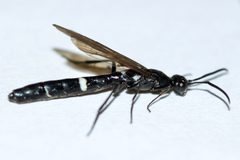
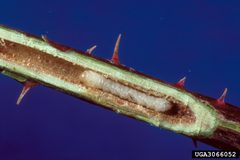
Phylloecus trimaculatus, commonly known as the rose shoot , is a in the Cephidae. emerge in late April and oviposit inside the stems of Rosa and Rubus . Larvae feed within stems throughout the summer before dropping to the ground to overwinter. The species occurs from southern Canada through the eastern United States to the Great Plains.
Pronunciation
How to pronounce Phylloecus trimaculatus: /ˌfɪloʊˈiːkəs ˌtraɪmækjʊˈleɪtəs/
These audio files are automatically generated. While they are not always 100% accurate, they are a good starting point.
Images
Habitat
Associated with Rosa and Rubus in temperate regions.
Distribution
Southern Canada (British Columbia, Manitoba, New Brunswick, Nova Scotia) and eastern United States extending to the Great Plains.
Seasonality
emerge in late April. Larvae active throughout summer. occurs in autumn.
Diet
Larvae feed on stems of Rosa and Rubus .
Host Associations
- Rosa - larval laid inside stems; larvae feed within stems
- Rubus - larval laid inside stems; larvae feed within stems
Life Cycle
are laid inside stems. Larvae develop within stems through summer. In autumn, larvae drop to ground to overwinter. and occur the following spring.
Human Relevance
Potential pest of rose and bramble crops due to stem-boring larval activity.