
Hartigiini
Genus Guides
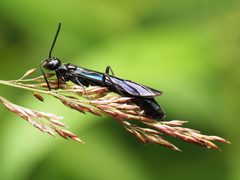
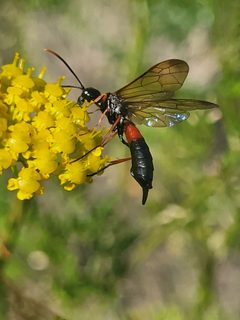
3Hartigiini is a tribe of stem sawflies in the Cephidae. Members are characterized by their elongated, cylindrical bodies and reduced wing venation relative to other . The tribe contains several distributed primarily in the Holarctic region. These insects are associated with woody plants, where larvae develop internally in stems.
Pronunciation
How to pronounce Hartigiini: //hɑrˈtiːd͡ʒiˌiːnaɪ//
These audio files are automatically generated. While they are not always 100% accurate, they are a good starting point.
Identification
Hartigiini can be distinguished from the related tribe Cephini by subtle differences in antennal structure and wing venation patterns. Members generally possess 14 or fewer antennal segments, whereas Cephini typically have more. The forewing lacks the distinct enclosed found in many other . Body form is consistently slender and cylindrical, lacking the compressed shape seen in some related groups.
Images
Distribution
Primarily distributed across the Holarctic region, including North America, Europe, and northern Asia. Specific range boundaries for the tribe as a whole remain incompletely documented.
Host Associations
- woody plants - larval developmentlarvae develop internally in stems