
Cephus
Latreille, 1802
stem sawflies
Species Guides
2- Cephus cinctus(Wheat Stem Sawfly)
- Cephus pygmaeus(European wheat stem sawfly)
Cephus is a of stem sawflies in the Cephidae, first described by Latreille in 1802. Members are found in Europe and North America. These insects are notable for their cylindrical, -like bodies and their habit of boring into grass stems.
Pronunciation
How to pronounce Cephus: /ˈke.fus/
These audio files are automatically generated. While they are not always 100% accurate, they are a good starting point.
Identification
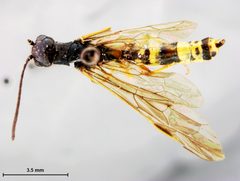
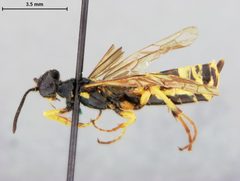
Distinguished from other by the cylindrical, -waisted body form—unlike the broad, unconstricted waists typical of most . Cephidae are the only family in the superfamily , making them identifiable by this unique body plan combined with stem-boring larval habits. may be confused with ichneumon wasps but lack the extremely long ovipositors of many wasps and show characteristic sawfly wing venation.
Images
Appearance
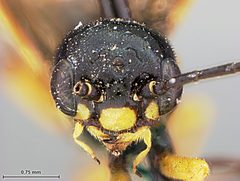
have slender, cylindrical bodies with a distinct -waisted appearance despite being in the suborder . The body is typically black or dark-colored with yellow or orange markings. are long and thread-like. Wings are clear with reduced venation. The tapers to a point, and females possess a saw-like ovipositor.
Habitat
Associated with grasslands, meadows, and agricultural fields where grasses grow. Larvae develop inside the stems of grasses and cereal crops. are found in open, sunny with abundant grass vegetation.
Distribution
Europe and North America.
Seasonality
are active during summer months, with peak activity typically in June and July. Larval development occurs within grass stems throughout the growing season.
Diet
Larvae feed internally on the pith and vascular tissues of grass stems. do not feed or have minimal feeding on nectar.
Host Associations
- grasses - larval larvae bore into stems of various grass including cereals
- cereals - larval including wheat and other grain crops
Life Cycle
Females insert into grass stems using their saw-like ovipositor. Larvae tunnel downward through the stem pith, feeding internally and causing stem weakening or breakage. occurs within the stem or in soil. Typically with one per year.
Behavior
Larvae are concealed feeders, boring inside grass stems and moving downward as they develop. This stem-boring habit can cause 'whiteheads' in cereals—empty, bleached that fail to produce grain. are weak fliers and often run along stems rather than flying when disturbed.
Ecological Role
Larvae act as stem borers in grass , potentially affecting plant and . In agricultural settings, they function as pests of cereal crops. They provide food for avian and other insect . The contributes to nutrient cycling through plant tissue consumption.
Human Relevance
Several are significant agricultural pests, particularly of wheat and other cereals. Larval feeding weakens stems, causing lodging and yield loss. Known as 'wheat stem sawflies' or 'grain ' in pest management contexts. Control measures include crop varieties and agents.
Similar Taxa
- other Symphyta families (Tenthredinidae, Argidae, Pergidae)These have broad, unconstricted waists between and , unlike the cylindrical -waisted form of Cephidae
- Ichneumonidae (parasitoid wasps)Similar slender body form but belong to with different wing venation, and typically have much longer ovipositors relative to body size
More Details
Taxonomic History
The was established by Pierre André Latreille in 1802, making it one of the earlier described genera. The Cephidae is the sole representative of the superfamily , indicating a long independent evolutionary history.
Economic Importance
Cephus cinctus (wheat stem sawfly) and related cause significant economic damage to wheat production in North America, with losses estimated in millions of dollars. Research on wheat varieties has focused on solid-stemmed cultivars that limit larval survival.