
Sterictiphora
Billberg, 1820
Species Guides
2Sterictiphora is a Holarctic of in the Argidae. The genus contains approximately 20 described distributed across the northern temperate regions of North America, Europe, and Asia. Larvae of at least some species produce distinctive zigzag feeding patterns on leaves. The genus is distinguished from the superficially similar Aproceros (which feeds on Ulmus) by host association with Prunus species.
Pronunciation
How to pronounce Sterictiphora: /stɛrɪkˈtɪfərə/
These audio files are automatically generated. While they are not always 100% accurate, they are a good starting point.
Identification
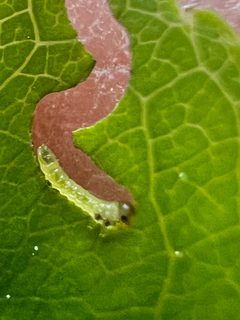
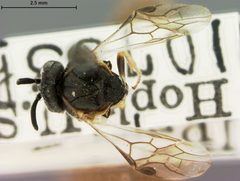
in this can be distinguished from the elm zigzag sawfly (Aproceros leucopoda) by plant: Sterictiphora feeds on Prunus species, while Aproceros feeds on Ulmus. Larvae of at least some Sterictiphora species produce zigzag feeding patterns similar to those of Aproceros, moving from leaf edges toward the midrib. identification to species level requires examination of morphological characters described in taxonomic revisions by Koch (1988) and others.
Images
Habitat
Associated with supporting Prunus plants, including woodlands, forest edges, and shrublands in temperate regions.
Distribution
Holarctic distribution, recorded from northern Europe (Denmark, Norway, Sweden), Asia (including Korea and Japan), and North America. GBIF records confirm presence in DK, NO, SE.
Diet
Larvae feed on Prunus (Rosaceae). Specific associations vary by species; Sterictiphora prunivorus has been documented on Prunus.
Host Associations
- Prunus - larval -level association; specific Prunus vary among Sterictiphora species
Behavior
Larvae of at least some feed in a characteristic zigzag pattern from the leaf margin toward the midrib, creating distinctive and readily identifiable feeding damage.
Ecological Role
Herbivore in temperate forest and shrubland ; larval feeding contributes to leaf damage on Prunus .
Human Relevance
May be confused with the elm zigzag sawfly (Aproceros leucopoda) due to similar larval feeding patterns, but poses no threat to elm trees. No significant economic or ecological impact documented.
Similar Taxa
- Aproceros leucopodaProduces nearly identical zigzag larval feeding patterns; distinguished by plant (Ulmus vs. Prunus) and geographic origin (East Asian native, in North America and Europe)
Misconceptions
Larvae may be mistaken for those of the elm zigzag sawfly due to similar feeding damage patterns; correct identification requires plant verification.
More Details
Taxonomic note
The contains described by multiple authors including Panzer (1799), Villers (1789), Klug (1814), and more recent descriptions by Koch (1988), Lee & Wei (2016), and others. Several species were originally described in other genera and later transferred to Sterictiphora.