
Neolarra
Ashmead, 1890
Species Guides
3- Neolarra californica(cuckoo bee)
- Neolarra verbesinae(cuckoo bee)
- Neolarra vigilans
Neolarra is a of minute cuckoo bees in the Apidae, containing approximately 16 described restricted to North America. These bees are kleptoparasites that target nests of Perdita bees, laying that hatch into larvae that consume the 's provisions and offspring. are exceptionally small, measuring less than a grain of rice. The genus was first described in 1890 by Ashmead, who initially misclassified it as a genus.
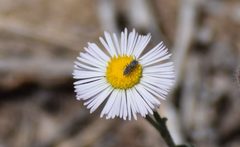
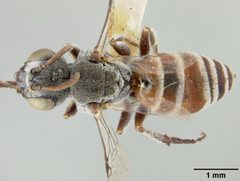
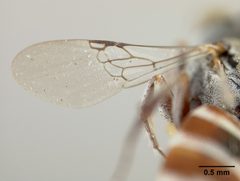
Pronunciation
How to pronounce Neolarra: //niːoʊˈlɑːrə//
These audio files are automatically generated. While they are not always 100% accurate, they are a good starting point.
Identification
Distinguished from other cuckoo bees by its extremely small size and association with Perdita nests. Separation from other minute Nomadinae requires detailed examination; the genus Phileremulus was synonymized as a subgenus of Neolarra. Specific -level identification is challenging and may require specialized taxonomic expertise.
Images
Appearance
Extremely small bees, smaller than a grain of rice. Specific morphological details of are not well documented in available sources.
Habitat
Distribution
North America only. All approximately 16 described are restricted to this continent.
Seasonality
Host Associations
- Perdita - kleptoparasite laid in nests; larvae consume host egg and pollen provisions
Life Cycle
are inserted into walls of , likely while the host is absent. Larvae possess a hard, sickle-shaped tooth used to kill the host egg or larva. Developmental stages and details are not documented.
Behavior
Females enter nests during the host's absence to avoid detection. are concealed by insertion into walls rather than direct deposition on provisions. Larvae are aggressive that eliminate host offspring.
Ecological Role
Human Relevance
No documented direct economic or agricultural significance. Of interest primarily to taxonomists and students of parasitic bee .
Similar Taxa
Misconceptions
Originally described by Ashmead in 1890 as a of rather than bees; this error was corrected by Baker in 1896.
More Details
Taxonomic history
The Phileremulus, erected in 1895 during the period when Neolarra was misclassified as , was revised by Charles Michener in 1939 to be a subgenus of Neolarra.