
Triepeolus utahensis
(Cockerell, 1921)
Utah Longhorn-Cuckoo
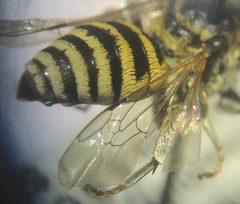
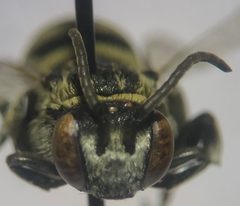
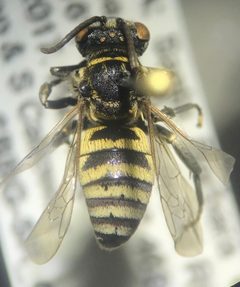
Triepeolus utahensis is a cleptoparasitic in the Apidae, first described by Cockerell in 1921. As a member of the Triepeolus, it is a cuckoo bee that parasitizes nests of digger bees (Anthophorini). The is native to western North America, with the specific epithet 'utahensis' indicating its association with Utah. Like other Triepeolus species, it lacks pollen-collecting structures and relies entirely on nests for larval provisioning.
Pronunciation
How to pronounce Triepeolus utahensis: //traɪˈɛpiələs ˌjuːtəˈhɛnsɪs//
These audio files are automatically generated. While they are not always 100% accurate, they are a good starting point.
Identification
Triepeolus are distinguished from other cuckoo bees by their robust body form, reduced scopal hairs (lacking pollen-carrying structures), and often striking black-and-white or black-and-yellow abdominal banding patterns. T. utahensis can be separated from by subtle morphological features of the , , and male genitalia; precise identification requires examination of diagnostic characters described in the original species description. The is placed in tribe Epeolini, which differs from related Nomadini by features of the and mouthparts.
Images
Distribution
Western North America; known from Utah and surrounding regions. GBIF records indicate presence in North America.
Host Associations
- Anthophorini - Parasitizes nests of digger bees; specific for T. utahensis not documented in available sources.
Behavior
As a cleptoparasitic , females enter nests to deposit in provisioned by host females. The Triepeolus larva consumes the host's pollen/nectar stores and typically destroys the host egg or larva. This parasitic lifestyle eliminates the need for nest construction or pollen collection.
Ecological Role
Acts as a of solitary bees, potentially regulating densities. Contributes to diversity through its specialized parasitic .
Similar Taxa
- Triepeolus punctoclypeusCongeneric with similar cleptoparasitic and general body plan; distinguished by clypeal punctation and other subtle morphological features.
- Epeolus speciesRelated cuckoo bees in tribe Epeolini; Triepeolus differs in body proportions, facial markings, and male genitalia structure.
- Nomada speciesSuperficially similar cuckoo bees in tribe Nomadini; distinguished by wing venation, mouthpart structure, and typically more slender body form.
Sources and further reading
- BugGuide
- GBIF taxonomy match
- iNaturalist taxon
- NCBI Taxonomy
- Catalogue of Life
- The Native Bees in the UC Davis Bee Haven | Bug Squad
- What Native California Plants Are Best for Attracting Pollinators? | Bug Squad
- Grasshoppers of Colorado
- Grasshoppers of Colorado
- Grasshoppers of Colorado
- Primary Type List | Entomology Research Museum