
Triepeolus remigatus
(Fabricius, 1804)
Squash Longhorn-Cuckoo, cuckoo bee
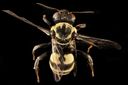
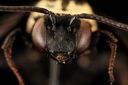
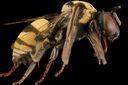
Triepeolus remigatus is a cleptoparasitic (cuckoo bee) in the Apidae. It parasitizes the nests of squash bees, particularly Xenoglossa pruinosa. Unlike most bees, it does not collect pollen or construct its own nests. The is found in the United States, Mexico, and Central America.
Pronunciation
How to pronounce Triepeolus remigatus: /traɪˌɛpiˈoʊləs ˌrɛmɪˈɡeɪtəs/
These audio files are automatically generated. While they are not always 100% accurate, they are a good starting point.
Identification
Triepeolus remigatus can be distinguished from its Xenoglossa pruinosa and other similar bees by its cleptoparasitic lifestyle and associated morphological traits. As a member of the Epeolini, it lacks the pollen-collecting structures present in its host. Males have been observed foraging on flowers without gathering pollen.
Images
Habitat
Ground-nesting environments; nests in . Associated with agricultural and natural landscapes where its , the squash bee Xenoglossa pruinosa, occurs.
Distribution
United States, Mexico, and Central America.
Diet
Cleptoparasitic; provisions obtained from nests. Does not collect pollen or nectar for its own offspring; larvae consume the pollen stores provided by the host .
Host Associations
- Xenoglossa pruinosa - primary squash bee; ground-nesting whose nests are parasitized
Life Cycle
Open- ; lays in nests. Larvae develop by consuming the host's pollen provisions.
Behavior
Interactions with are characterized by and avoidance rather than aggression. Prefers entering host nests while the host is foraging, suggesting a detection avoidance strategy. Makes rapid visits to host nests without extensive inspection. These appear adapted to optimize parasitic success while minimizing host detection.
Ecological Role
of ground-nesting bees. Functions as an open- in , potentially influencing .
Similar Taxa
- Xenoglossa pruinosa ; T. remigatus parasitizes its nests. X. pruinosa is a pollen-collecting squash bee with nest-constructing , while T. remigatus is a lacking these traits.
- Triepeolus concavusCongeneric cuckoo bee; both are in the Triepeolus with similar .
Sources and further reading
- BugGuide
- Wikipedia
- GBIF taxonomy match
- iNaturalist taxon
- NCBI Taxonomy
- Catalogue of Life
- The Native Bees in the UC Davis Bee Haven | Bug Squad
- What Native California Plants Are Best for Attracting Pollinators? | Bug Squad
- Primary Type List | Entomology Research Museum
- Researching the Hedgerows | Bug Squad
- California Poppy: No Nectar, Just Pollen | Bug Squad
- Know Your Native Bees: Here's How! | Bug Squad
- Host-parasite interactions between Xenoglossa pruinosa (Apidae: Eucerini) and Triepeolus remigatus (Apidae: Epeolini) are characterized by tolerance and avoidance